
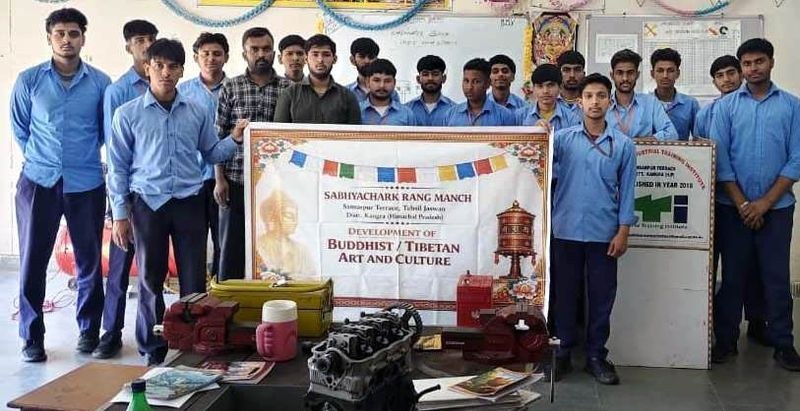
Trainees from the local Government Industrial Training Institute (ITI) and members of youth clubs actively participated in the event, which focused on the enduring relevance of non-violence in Indian traditions.
Inaugurating the seminar, educationist Manoj Kumar said non-violence is a fundamental and invaluable spiritual principle deeply rooted in Indian heritage. He noted that despite differences among various schools of Indian philosophy, non-violence remains a common thread.
Referring to Gautama Buddha, he said non-violence is grounded in love and compassion for all living beings and involves abstaining from physical, verbal and mental harm.
Academician Gurdev Singh told participants that Buddha’s concept of non-violence goes beyond merely avoiding conflict or war, encompassing a holistic approach that discourages violence in thought, speech and action. He added that Buddha regarded non-violence as essential for achieving peace, happiness and prosperity, stressing that harming others ultimately harms oneself.
Resource person Jasbinder Singh highlighted the relevance of non-violence in contemporary times, saying that while people universally aspire for peace, achieving it requires greater awareness and practice of non-violence.
The Baisakhi Sale Plan offers an excellent value of 2 years of subscription + 6 months complimentary.
If you proceed with this purchase, your current monthly subscription plan will be immediately cancelled.
30?"green-strip-scroll":""}">n ${e.display_status||e.scheduleTime}n
30?"green-strip-scroll":""}">n ${e.display_status+", "+e.scheduleTime}n