
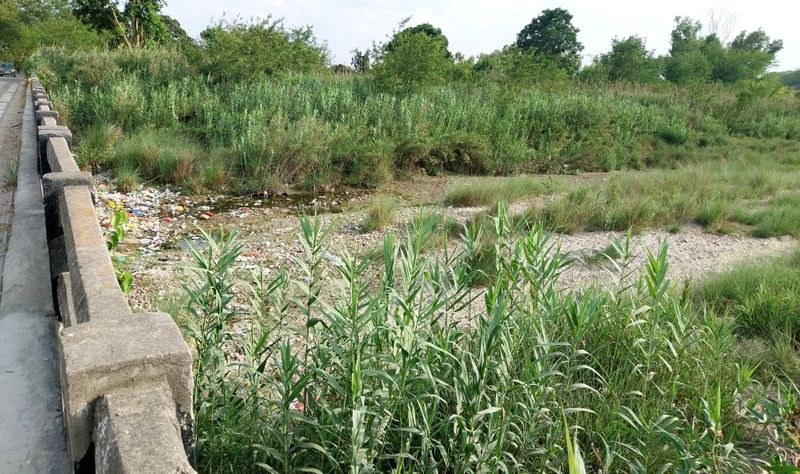
For three consecutive years, the district has faced the fury of floods, leaving behind damaged infrastructure, disrupted livelihoods and shaken confidence. The current condition of the river system offers little reassurance. The Swan river, along with its extensive network of 73 tributaries, is a unique flood management system in northern India, fortified with stone-pitched embankments on both sides. Designed with precision under a World Bank-funded project, these embankments were meant to safely channel rain-fed flows based on calculated catchment capacities, assuming clear, obstruction-free channels.
That assumption no longer holds true. For most of the year, these channels remain dry, inadvertently becoming fertile ground for aggressive vegetation. Over nine months, dense growth of weeds and shrubs takes root across the riverbeds. By the time monsoon clouds gather, species such as giant reed and nut grass have already spread thickly, constricting water flow into narrow passages and increasing resistance against fast-moving rainwater.
Compounding the problem is the steady rise of riverbeds in the tributaries due to silt deposits left behind after each monsoon. While sand and gravel mining continues in designated stretches of the main Swan river, tributary channels remain largely untouched. Maintenance activities such as dredging, desilting and vegetation clearance have significantly declined since the flood protection project concluded nearly eight years ago, leaving the system increasingly vulnerable.
The consequences of this neglect have already been felt. Previous monsoons witnessed destructive overflows that washed away a key bridge over the Rampur tributary and partially damaged the Jhalera-Ghaluwal bridge over the Swan river. With blockages restricting flow, the force of water and silt intensifies, posing threats not only to infrastructure like bridges and culverts but also to farmlands and residential areas.
Acknowledging the urgency, Additional Deputy Commissioner Mahender Pal Gurjar said water channels within the Una Municipal Corporation limits will be cleared before the onset of monsoons to prevent flooding in urban pockets. However, the scale of the problem extends far beyond town limits, demanding coordinated and sustained intervention across the district.
As skies prepare to open, Una once again stands at a crossroads, between preparedness and repeat disaster.
The Baisakhi Sale Plan offers an excellent value of 2 years of subscription + 6 months complimentary.
If you proceed with this purchase, your current monthly subscription plan will be immediately cancelled.
30?"green-strip-scroll":""}">n ${e.display_status||e.scheduleTime}n
30?"green-strip-scroll":""}">n ${e.display_status+", "+e.scheduleTime}n