
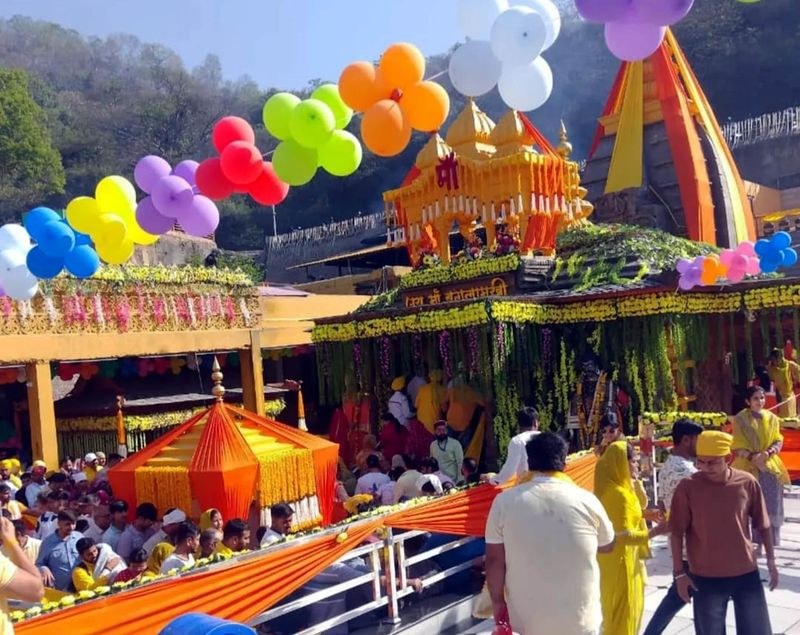
The shrine resonated with chants and rituals dedicated to the goddess of ‘Stambhan’, believed to possess the divine power to halt adversities, enemies and legal obstacles. Devotees, many clad in yellow, offered turmeric garlands, yellow flowers and peeli sarson (mustard seeds), symbolising energy, prosperity and victory. The deity, also known as Pitambara Devi, is closely associated with the colour yellow, lending a distinctive hue to the entire complex during the celebrations.
The temple’s origins are linked to the erstwhile rulers of Guler, ardent devotees of the goddess, who are believed to have constructed the shrine at Bankhandi after losing the Kotla fort to Maharaja Ranjit Singh in the early nineteenth century. The historical connect continues to enhance the spiritual significance of the site.
Special prayers during the Brahma Muhurta and evening aarti hours witnessed an overwhelming turnout, with pilgrims arriving from across the country. The festival not only reflects deep-rooted faith of devotees, but also showcases the enduring cultural and spiritual vibrancy of the region.
The Baisakhi Sale Plan offers an excellent value of 2 years of subscription + 6 months complimentary.
If you proceed with this purchase, your current monthly subscription plan will be immediately cancelled.
30?"green-strip-scroll":""}">n ${e.display_status||e.scheduleTime}n
30?"green-strip-scroll":""}">n ${e.display_status+", "+e.scheduleTime}n