
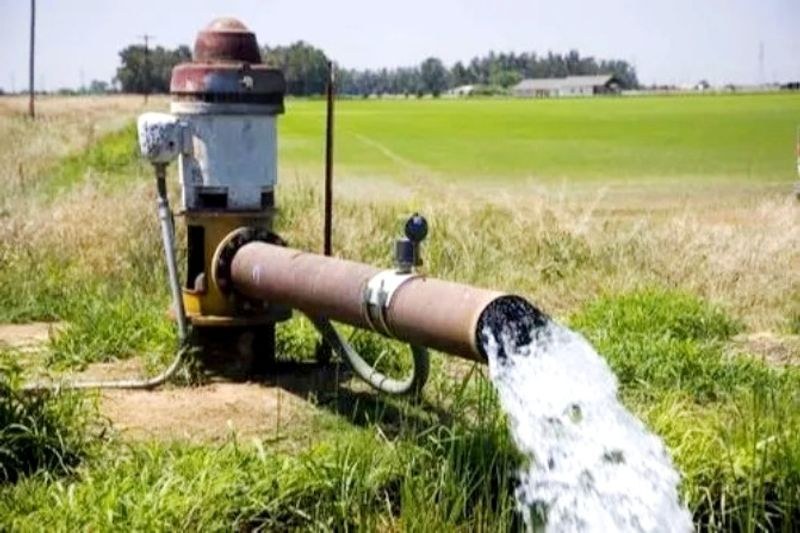
Hydrogeologists have warned that the trend could place significant pressure on the state’s limited groundwater resources, particularly in Una district, which is heavily dependent on underground water reserves.
Groundwater aquifers remain in a constant state of flux, with extraction by human activity reducing reserves while rainfall replenishes these. However, aquifers come under stress when annual withdrawals exceed their natural recharge capacity.
Under parameters prescribed by the National Hydrogeology Department, annual extraction of up to 70 per cent of recharge capacity is categorised as ‘Safe’. Extraction between 70 and 90 per cent is classified as ‘Semi-Critical’, while withdrawals between 90 and 100 per cent fall under the ‘Critical’ category. Aquifers from which extraction exceeds annual recharge are termed ‘Over-Exploited’.
Senior State Hydrogeologist Bhavnesh Sharma said the Central Ground Water Board monitors the country’s dynamic groundwater resources annually. He noted that Himachal Pradesh’s significant groundwater reserves are largely confined to pockets in five districts — Kangra, Mandi, Sirmaur, Solan and Una.
“In most other parts of the state, steep rocky terrain and hard geological formations prevent rainwater from percolating into the ground. Much of the rainfall becomes surface run-off, while water needs are met through rivers, reservoirs and subsurface seepage,” Sharma said.
According to Sharma, the state’s extractable groundwater reserves are restricted to 10 valleys, covering only 6.29 per cent of Himachal Pradesh’s geographical area.
Among these, the Nalagarh valley aquifer, spread across 325.66 square kilometres, is the most stressed. Annual extraction has reached 69.42 per cent of its recharge capacity, leaving it just 0.58 percentage points short of entering the ‘Semi-Critical’ category.
In Una district, where loose soil and relatively flat terrain facilitate groundwater recharge, the largest aquifer is the Satluj basin, covering 1,051.96 square kilometres. Annual withdrawals have already reached 67.07 per cent of recharge capacity, placing it only 2.93 percentage points below the ‘Semi-Critical’ threshold.
The Hum valley aquifer, which supports parts of Haroli subdivision, is also showing signs of increasing stress. Despite covering only 28.7 square kilometres, annual withdrawals have risen to 62.14 per cent and continue to increase.
The remaining seven aquifers in the state currently remain within safe limits. Annual extraction stands at 23.68 per cent in the Nurpur-Indora valley, 26.6 per cent in the Dharamshala-Palampur valley, 46.54 per cent in Balh valley, 2.84 per cent in Chauntra valley, 23.67 per cent in Paonta valley, 36.58 per cent in Kala Amb valley and 30.1 per cent in the Beas basin Una valley.
Superintending Engineer of the Jal Shakti Department in Una, Naresh Dhiman, said 227 deep-bore drinking water schemes and 596 lift irrigation schemes are currently operational in the district.
He said work is underway on around 100 new deep-bore tubewells for drinking water and irrigation purposes, including a cluster of wells planned for the proposed bulk drug park in Haroli. In addition, around 50 existing tubewells have become defunct and will need replacement.
Officials estimate that the completion of these 150 new and replacement tubewells could increase groundwater extraction in Una by a further 15 to 20 per cent, pushing the district into the ‘Semi-Critical’ category and bringing it close to the ‘Critical’ stage.
Unlike many other districts, Una does not have a perennial river system and remains heavily dependent on groundwater extraction. To reduce this dependence, the Bhabour Sahib Irrigation Scheme was commissioned in phases to irrigate agricultural land in Una subdivision by lifting water from the Satluj reservoir at Nangal Dam. However, any increase in water withdrawal from the reservoir requires approval from the Bhakra Beas Management Board (BBMB).
The state government had also explored a proposal to lift water from the Beas River to meet growing irrigation and drinking water demands in the district. The project, however, was shelved due to technical difficulties.