
Flowing from the Bara Bhangal region through the remote Himalayan valleys of Himachal Pradesh before entering Punjab and Pakistan, the Ravi has for centuries sustained agriculture, livestock-based livelihoods and biodiversity across the region. However, large stretches of the river are now showing clear signs of ecological decline due to pollution, hydropower development, illegal mining and unchecked urban expansion.
Dr Mohinder Salariya, environmental sociologist and Principal of G
The mighty Ravi flowing near Chamba during the monsoon. Photo: Dr Mohinder Salariya
overnment College, Salooni in Chamba district, said the river’s deteriorating condition reflected a widening imbalance between development and environmental sustainability in the western Himalayas.
“In mountain societies like Chamba, rivers are not merely water channels,” Dr Salariya said. “They are part of local identity, ecological security and cultural continuity. The crisis affecting the Ravi is no longer only about environmental degradation; it is directly linked to sustainable development and the ecological future of Himalayan communities,” he added.
One of the most significant changes in the Ravi basin has been the rapid expansion of hydroelectric infrastructure. Chamba district hosts several major hydropower projects, including the NHPC-operated Chamera projects, which have substantially altered the river’s natural flow and ecological behaviour.
According to Dr Salariya, hydropower interventions have disrupted the river’s continuity by diverting water through tunnels, reservoirs and power channels, creating extended low-flow and dry stretches across the basin.
“Himalayan river ecosystems depend upon uninterrupted flow to maintain aquatic biodiversity, sediment movement and ecological balance,” he said. “When water is diverted through tunnels and controlled artificially, aquatic habitats deteriorate and ecological continuity becomes fragmented,” he added.
Field observations and interactions with communities living near project sites indicate growing concern over falling water levels, declining aquatic life and changes in river quality. Residents in areas around Chamera and downstream stretches allege that water released from power projects occasionally turns black and foul-smelling.
Research conducted by Dr Salariya suggests that hydropower projects have created an approximately 68-kilometre dry patch along the Ravi’s 158-kilometre course in Himachal Pradesh. Similar ecological stress has also been observed in its tributaries.
He added that dam infrastructure interrupts the river’s natural sediment cycle. Reservoirs trap sediments, minerals and organic matter that would otherwise replenish downstream ecosystems, affecting river behaviour and aquatic species dependent on stable ecological conditions.
Traditional fishing activities, once an important source of livelihood for families living along the riverbanks, have also steadily declined because of habitat disturbance and changing river ecology.
Illegal riverbed mining has emerged as another major threat. Excessive extraction of sand, gravel and stones using mechanical methods is weakening riverbanks and disturbing the river’s natural flow.
“Such activities disturb the structural stability of the river ecosystem,” Dr Salariya said. “Mountain ecosystems are highly sensitive and possess limited carrying capacity. Disturbances in riverbeds increase the vulnerability of nearby settlements and agricultural land during extreme weather events.”
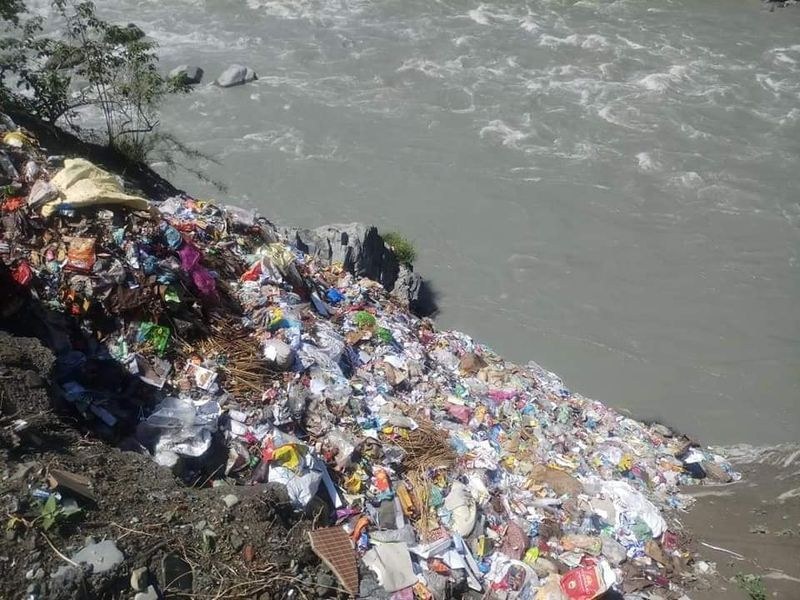
The Ravi is also facing mounting pressure from poor waste management and expanding urbanisation. Plastic waste along riverbanks, construction debris dumped near water channels and untreated sewage entering drains have become common sights around Chamba town and nearby settlements.