
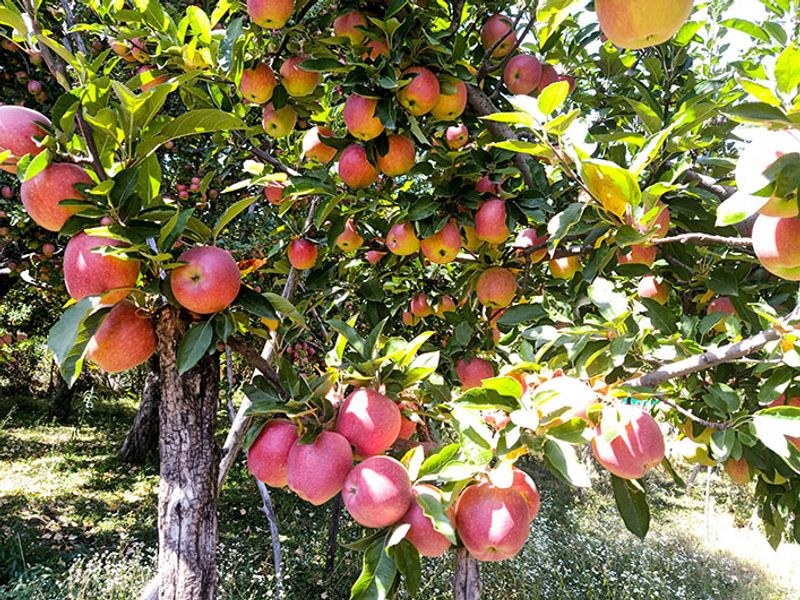
Speaking to mediapersons, Rathore said the agreement has created anxiety among apple-growing communities in Himachal Pradesh, Jammu and Kashmir and Uttarakhand. He pointed out that under the FTA, India will reduce the basic customs duty on New Zealand apples from 50% to 25% for imports within a tariff rate quota (TRQ). The quota is set to begin at 32,500 metric tonnes in the first year and gradually increase to 45,000 metric tonnes by the sixth year. These imports will be allowed during the April–August window, with a minimum import price fixed at $1.25 per kg (around Rs 118 per kg).
Rathore noted that even this calibrated opening of the market could expose Indian growers to intense competition from one of the world’s most efficient apple-producing nations. He highlighted the stark productivity gap, stating that New Zealand orchards yield between 50 and 70 tonnes per hectare, while average productivity in Himachal Pradesh remains at just 7 to 8 tonnes per hectare.
He warned that without robust safeguards, such as strict enforcement of quotas, adherence to minimum import pricing and seasonal regulation, farmers’ incomes could come under pressure. A potential decline in prices, he said, would not only impact immediate earnings but also reduce future investments in orchards, ultimately weakening the rural economy.
Emphasising the socio-economic importance of apple cultivation, Rathore said the sector forms the backbone of livelihoods in the hill states, sustaining employment and rural stability. He also urged the government to engage directly with farmer groups before implementing further policy changes.
The Baisakhi Sale Plan offers an excellent value of 2 years of subscription + 6 months complimentary.
If you proceed with this purchase, your current monthly subscription plan will be immediately cancelled.
30?"green-strip-scroll":""}">n ${e.display_status||e.scheduleTime}n
30?"green-strip-scroll":""}">n ${e.display_status+", "+e.scheduleTime}n