
The increasing incidence of road rage, violent altercations and public confrontations between tourists and locals has become a matter of concern. Social media is replete with videos of disputes over parking, traffic snarls, overcharging allegations and aggressive behaviour. Such episodes tarnish the image of a state proudly known as “Devbhoomi,” where the ethos of hospitality is deeply embedded in its cultural fabric.
The problem is most visible on the roads. During the peak season, an estimated 8,000 to 10,000 vehicles enter Shimla every day, while another 4,000 vehicles head towards the Kullu-Manali region. Narrow, winding mountain roads, limited parking spaces and inadequate urban infrastructure make handling such volumes a daunting challenge for local authorities.
Traffic congestion has reached such levels that the Shimla police recently advised tourists travelling beyond the capital to avoid entering the town and instead use the Shoghi-Maihali bypass. Yet traffic jams lasting several hours remain commonplace, causing inconvenience not only to visitors but also to local residents.
The situation is further aggravated by recurring incidents of violence. Road rage and ego clashes have frequently escalated into physical confrontations, particularly around Manali. Reports of tourists carrying swords, sticks and even firearms have heightened safety concerns.
Earlier this week, a shooting incident in Manali left one person critically injured, while another tragic accident claimed the life of a local resident who was crushed by a vehicle bearing a Delhi registration number. Such incidents are no longer isolated occurrences but a recurring feature of every tourist season.
Against this backdrop, the debate over regulating tourist inflow is gaining traction. Experts and environmentalists argue that every hill town has a carrying capacity, a threshold beyond which infrastructure, ecology and quality of life begin to deteriorate. They advocate scientific assessments to determine how many vehicles and visitors a destination can safely accommodate.
The challenge, however, is complex. Tourism remains the economic lifeline for thousands of families. Hoteliers, taxi operators, guides, restaurant owners and small traders earn a substantial portion of their annual income during the summer and winter tourist seasons. Any move to restrict tourist numbers must therefore balance environmental sustainability with economic realities.
Chief Minister Sukhvinder Singh Sukhu has acknowledged that excessive concretisation has diminished the charm of hill towns like Shimla and stressed the need for planned development and decongestion. Urban planner and former Shimla Deputy Mayor Tikender Panwar echoes the sentiment, emphasising that tourism growth in the Himalayas must be guided by ecological sensitivity and long-term planning.
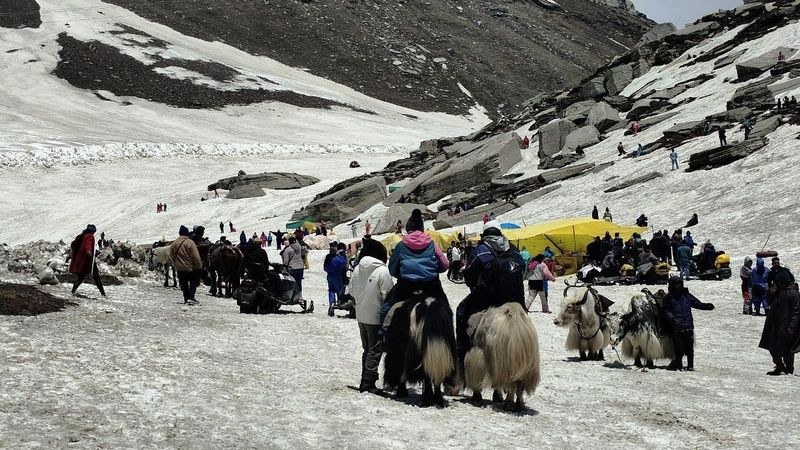
Himachal’s experience at Rohtang Pass offers an important lesson. Despite initial opposition, the cap imposed by the National Green Tribunal on vehicle movement helped protect the fragile ecosystem and is now widely accepted.
Perhaps the state can draw inspiration from Bhutan’s globally acclaimed “High Value–Low Volume” tourism model. By regulating visitor numbers and imposing an environmental levy, Bhutan has managed to protect its natural heritage while ensuring sustainable economic benefits.
For Himachal, the choice is becoming increasingly clear. The question is no longer whether tourism should be regulated, but how quickly sustainable policies can be implemented before overcrowding erodes the very beauty that draws visitors to the mountains.
Anup Ram Thakur, president of the Kullu-Manali Paryatan Vikas Mandal, condemned incidents of tourists brandishing weapons and hooliganism. He said minor disputes should be resolved through mutual understanding, but illegal weapons and violence must be dealt with firmly under law. He urged visitors to treat Himachal as their own motherland and avoid unruly behaviour.
The Baisakhi Sale Plan offers an excellent value of 2 years of subscription + 6 months complimentary.
If you proceed with this purchase, your current monthly subscription plan will be immediately cancelled.