
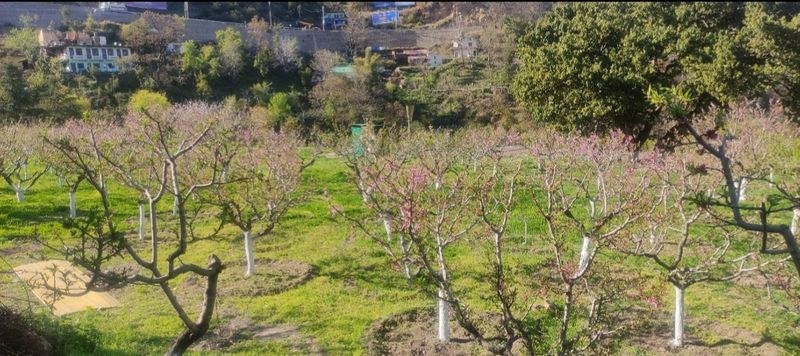
The region has witnessed unusual weather conditions during April and the first week of May, raising concern among farmers, horticulturists and agricultural scientists.
Meteorological observations indicate sharp deviations in temperature and rainfall patterns. During the first week of May, the maximum temperature dropped to 26°C against the long-term average of 31.1°C, while the minimum temperature fell to 12°C compared to the normal 16.4°C.
Long-term data analysed by the department also show a declining trend of 0.03°C per year in maximum temperature and 0.05°C per year in minimum temperature during May in Solan district.
Satish Bhardwaj, Head of Department at Dr YS Parmar University of Horticulture and Forestry, said such low temperatures during flowering and fruit development adversely affect pollination, pollen germination and fruit setting in temperate fruit crops, especially apple.
“Apple orchards currently in the flowering stage are highly vulnerable to prolonged cool and wet conditions,” he observed.
He said reduced sunshine and persistent cloud cover decrease photosynthetic activity and carbohydrate production essential for fruit development. Low temperatures and humid conditions also reduce bee activity, affecting pollination efficiency and resulting in poor or irregular fruit set.
The region recorded 86.6 mm rainfall during April against the normal 43 mm, marking nearly 101 per cent excess precipitation. According to university observations, April maximum and minimum temperatures dropped to 27.3°C and 11.9°C against normal readings of 27.9°C and 12.6°C respectively.
Dr Bhardwaj said prolonged wet conditions increase the risk of fungal diseases in horticultural crops, while leaf wetness may trigger physiological disorders in apple and stone fruits during fruit development.
Hailstorms have further damaged flowers, young fruits, shoots and leaves, causing bruising, fruit scarring and blossom drop, thereby reducing market quality.
He added that unseasonal snowfall in higher reaches could delay thermal accumulation, affecting fruit enlargement and crop maturity in temperate fruit systems.
The weather anomalies are also affecting summer vegetables such as tomato and capsicum. Low temperatures and fluctuating soil moisture are hampering root establishment, nutrient uptake and seedling vigour, leading to delayed flowering and stunted growth.
Wet soil conditions have additionally increased disease incidence in crops such as wheat and garlic. Rain during harvest raises grain moisture in wheat, promoting lodging and fungal contamination, while garlic crops face risks of bulb rot, poor curing and storage losses.
Experts said the repeated disruption in crop-climate synchronisation underlines the urgent need for climate-resilient farming practices to minimise crop losses and ensure sustainable agriculture in the state.
The Baisakhi Sale Plan offers an excellent value of 2 years of subscription + 6 months complimentary.
If you proceed with this purchase, your current monthly subscription plan will be immediately cancelled.