
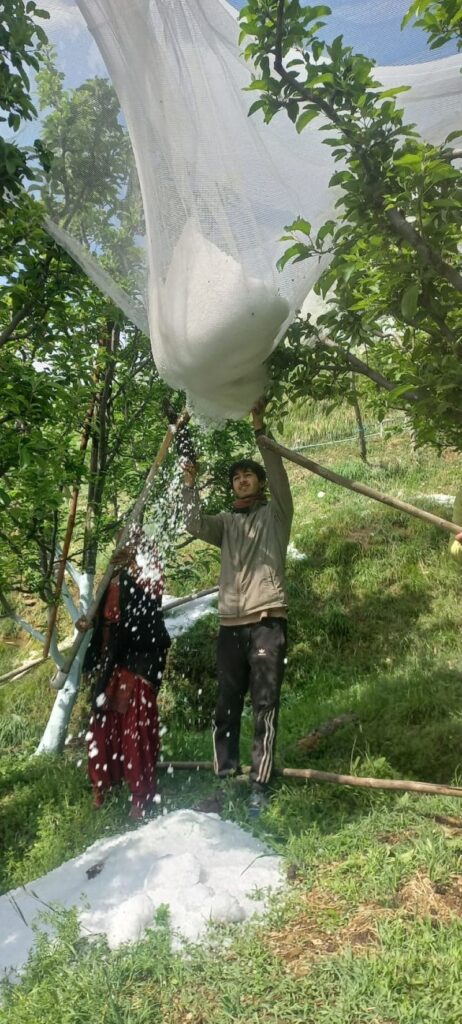
शिमला के एप्पल बेल्ट में हाल ही में आई ओलावृष्टि ने किसानों को बड़ा नुकसान पहुंचाया है। Kufri और Fagu जैसे लोकप्रिय हिल स्टेशनों में 30 मिनट से अधिक समय तक ओलावृष्टि हुई, जिससे 3-4 इंच तक ओले जमा हो गए। इस असामान्य रूप से भारी ओलावृष्टि ने एप्पल ऑर्चर्ड्स को काफी नुकसान पहुंचाया, जिसमें फल और पेड़ दोनों को नुकसान हुआ।
ओलावृष्टि का早 प्रभाव
एप्पल उत्पादकों का कहना है कि पहले ऐसी घटनाएं अप्रैल में कम होती थीं। परंपरागत रूप से, ओलावृष्टि मई और जून के मध्य के बीच होती थी, जो प्री-मानसून बारिश से पहले होती थी। हालांकि, यह पैटर्न बदलने लगा है। "पिछले कुछ सालों से, ओलावृष्टि अप्रैल से ही नियमित रूप से होने लगी है। मौसम चक्र की तरह, यह भी बदलने लगा है," शिव प्रताप भिमटा, कोटखाई के एक ऑर्चर्डिस्ट ने कहा। नोटिस करने योग्य बात यह है कि सीजन की पहली ओलावृष्टि 30 मार्च को बागी बेल्ट में दर्ज की गई थी।
ओलावृष्टि का विस्तार
उत्पादकों के अनुसार, एक और चिंताजनक रुझान ओलावृष्टि के प्रभाव क्षेत्र का विस्तार है। पहले उच्च ऊंचाई और विशिष्ट भ弱 पॉकेट्स तक सीमित, ओलावृष्टि अब एक व्यापक भूगोल को प्रभावित कर रही है, जिसमें कम ऊंचाई वाले क्षेत्र भी शामिल हैं जो पहले अपेक्षाकृत सुरक्षित माने जाते थे। कई किसान ओलावृष्टि के बढ़ते मामलों को सूखे शीतकालीन परिस्थितियों से जोड़ते हैं, जो कम शीतकालीन वर्षा और बढ़ती ओलावृष्टि गतिविधि के बीच एक संबंध का सुझाव देते हैं।
विशेषज्ञों और किसान समूहों का कहना है कि जलवायु परिवर्तन के साथ ऐसी चरम मौसम की घटनाएं तेज होने की संभावना है। हरीश चौहान, संयुक्त किसान मंच के संयोजक, ने अनुकूलन उपायों और तकनीकी हस्तक्षेप की तत्काल आवश्यकता पर जोर दिया। उन्होंने कहा कि जबकि एंटी-हेल गन लगभग दो दशक पहले पेश की गई थीं, तब से उनकी दक्षता या किफायती में बहुत कम नवाचार या सुधार हुआ है।
भविष्य की योजनाएं
चौहान ने नीतिगत कमियों पर भी प्रकाश डाला, विशेष रूप से एंटी-हेल नेट्स के लिए सब्सिडी वितरण में देरी। उन्होंने तर्क दिया कि अग्रिम वित्तीय समर्थन आवश्यक है, क्योंकि अधिकांश किसान उच्च प्रारंभिक लागत वहन नहीं कर सकते हैं। समय पर सहायता और आधुनिक समाधानों के बिना, उत्पादकों को डर है कि बार-बार मौसम संबंधी घटनाएं उनकी आजीविका को प्रभावित करेंगी।
English Summary
The apple belt in Shimla has been severely affected by the recent hailstorm, with farmers reporting significant damage to their orchards. The hailstorm, which lasted for over 30 minutes, resulted in the accumulation of 3-4 inches of hail, causing harm to both fruit and trees. Apple growers say that such events were once rare in April, but the pattern appears to be shifting, with hailstorms now occurring regularly from April itself.
The expansion of hailstorm impact zones is also a worrying trend, with the affected areas now including lower elevation regions that were previously considered relatively safe. Many farmers link the surge in hail incidents to dry winter conditions, suggesting a correlation between reduced winter precipitation and increased hail activity. Experts and farmer groups warn that such extreme weather events are likely to intensify with climate change, and emphasize the need for adaptive measures and technological intervention.
The lack of innovation and improvement in anti-hail guns, which were introduced nearly two decades ago, is also a concern. Furthermore, the delay in subsidy disbursement for anti-hail nets is a significant issue, as most farmers cannot afford the high initial costs. Without timely assistance and modern solutions, growers fear that recurring weather shocks will impact their livelihoods. The need for urgent action to address these issues is clear, and it is essential that policymakers and stakeholders work together to find effective solutions to mitigate the effects of hailstorms on the apple industry in Shimla.
META: Himachal Pradesh apple belt hit by early hailstorms, causing significant damage to orchards and trees.