
By the early 19th century, the reputation of Kangra for ear and nose reconstruction surgery had spread so widely that noted British archaeologist Sir Alexander Cunningham wrote that nasal repair “still goes on in Kangra… people still come from Kabul and Nepal for treatment,” though the practice had declined since the end of the Sikh rule when nose amputation was a common punishment, requiring surgical repair. French traveller GT Vigne (1833-39), too, extensively documented the Kangra method of rhinoplasty, offering rare glimpses into an indigenous science far ahead of its time.
The Kangharia vaids used refined flap-based techniques, particularly forehead and cheek grafts, astonishingly similar to what modern surgeons call the paramedian forehead flap. Their knowledge was rooted in an unbroken medical lineage tracing back to ancient India: the Sushruta-Samhita, written in the first millennium BC, details nasal and ear reconstruction in remarkable anatomical clarity. Even a Vedic lore speaks of prosthetics, most famously the Ashvin twins giving Queen Vishpala an iron limb after a battlefield injury.
Local legends further amplify Kangra’s fame. One Mughal-era account describes a Kangra healer named Bidhiya, who allegedly reattached the severed nose of a thief on Emperor Akbar’s command so flawlessly that the emperor gave him land as reward. Such stories, whether embroidered or factual, underscore the prestige Kangra’s surgeons once enjoyed.
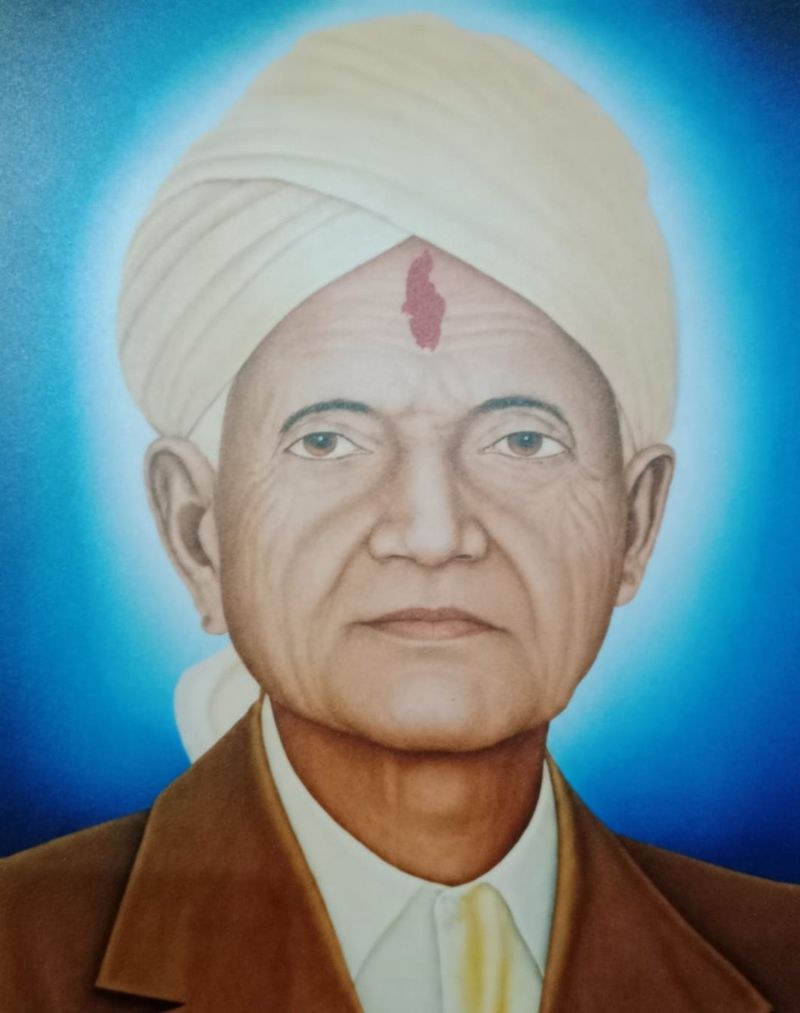
Yet by the mid-20th century, this surgical heritage had quietly faded. After Hakim Dina Nath passed away, no successor carried forward the tradition. British laws abolishing punitive mutilation reduced the demand for rhinoplasty while the absence of institutional training led to the craft slowly disappearing. Today, Kangra’s fabled surgical art survives only in scattered historical papers, local folklore and collections preserved in Maharaja Sansar Chandra Museum.
Medical historians now argue that this Himalayan district deserves recognition as one of the world’s earliest centres of plastic surgery. Techniques hundreds of years later adopted by European surgeons, including the work of British pioneer JC Carpue, were directly inspired by India’s rhinoplasty traditions, of which Kangra was a thriving epicentre.
Though it has disappeared, Kangra’s legacy remains etched in global surgical history and perhaps even in its name, reminding us that the science of healing and reconstructing the human form was mastered in these hills long before it reached the West.
“In 1932, my father Vaid Dina Nath Kangharia performed his final operation,” recalls Ashwinder Kangharia, the last custodian of Kangra’s fabled surgical lineage. “Our family still preserves the certificates of appreciation dating back to the Mughal courts of Shahjahan and Jahangir, written in Urdu, Farsi and Arabic. Patients once travelled from the entire frontier belt, from Kabul to the North-West provinces, to have their severed noses and torn ears repaired in Kangra.”
He adds details that reveals how deeply the tradition was woven into science and spirituality: “Before every operation, after administering medicines (native substitute for present-day anaesthesia that could be alcohol or hemp), an elaborate worship ritual was offered to Goddess Durga (Brajeshwari Mata), seeking divine blessing before my father took up the scalpel.”
Ashwinder says the physical remnants of that era did not survive in time. “I had the original surgical instruments but their condition has deteriorated over the years. What remain intact are the certificates, rare documents from centuries past, which we still display during the Lohri festival at Pragpur every year for public viewing.”
With his quiet testimony, Ashwinder Kangharia revives a nearly forgotten story — one in which Kangra’s healers blended devotion, skill and a sophisticated understanding of human anatomy long before modern plastic surgery was born.
Micky Kangharia, who runs an optical shop, says his grandfather Vaid Dina Nath, son of Vaid Gopi Nath, had three sons — Ram Kumar Kangharia, Kuljit Kangharia and Ashwinder Kangharia — but sadly the knowledge system earned in generations could not be preserved.
Kangra’s ear-shaped fort: A silent clue to its surgical past
Intriguingly, the mighty Kangra Fort (garh) is shaped like an ear, a coincidence too unusual to ignore. Whether this form carries a deeper link to the region’s age-old mastery of ear reconstruction is a mystery that still awaits scholarly exploration.
Steeped in antiquity, the fort is said to date back to the age of the Mahabharata. Its imposing architecture was so advanced for its time that it reportedly inspired European military fort designs in the 15th and 16th centuries. The kings, who presided over this realm, were renowned patrons of various forms of art and culture, a legacy firmly etched into the historical record.
It is widely believed that in wartime, soldiers frequently lost limbs, with ear being particularly vulnerable to sword strikes. Such injuries often demanded immediate reconstructive care so that warriors could return to the battlefield and remain combat-worthy for subsequent engagements.