
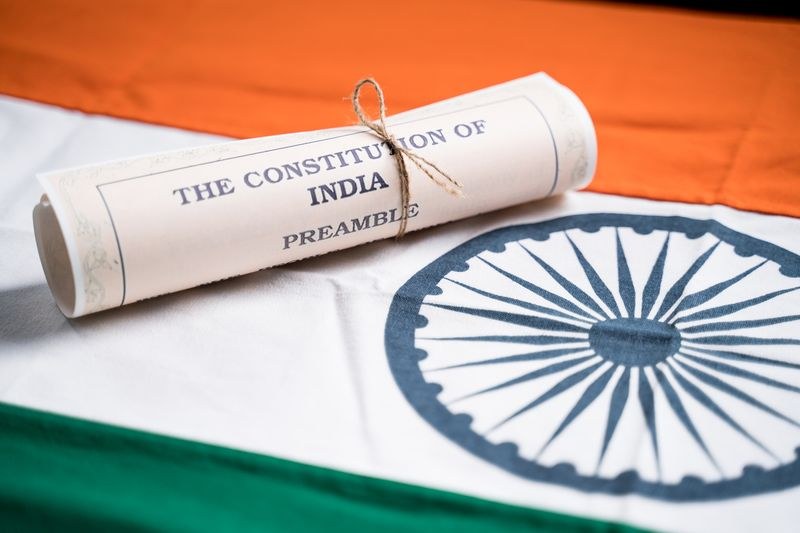
Her candidature itself reflects the transformative power of India’s Constitution, which has ensured political representation across caste and gender lines. Yet, the controversy surrounding her campaign has exposed how social equality still remains far from reality in many rural pockets.
The issue erupted after some supporters from the general category visited Akanksha’s home and shared a meal there. A video of the gathering surfaced on social media and quickly triggered intense reactions in the area. While many saw the act as a simple expression of equality and democratic spirit, others viewed it as a violation of local customs and traditions linked to the area’s deity culture.
Those offended by the incident argued that social norms associated with the local deity system had been disregarded. Some demanded action against the people involved according to traditional practices. A section of residents also claimed that the meal was staged merely as a political exercise to attract votes and gain sympathy during the elections.
Akanksha, however, has received strong backing from the CPM, which has openly defended the act. Senior CPM leader Rakesh Singha said the party believes in equality not merely as an idea but as a practice. He asserted that sharing meals with people from all castes and religions was completely natural in a democratic society. “The country will run according to the Constitution, not outdated social thinking,” he remarked, stressing that there was nothing controversial about eating at a Dalit household.
Political scientist Prof Rajinder Chauhan believes the controversy could ultimately serve as a catalyst for social change. According to him, deeply entrenched caste barriers weaken only when people begin questioning them openly. He observed that village life in many parts of Himachal still revolves around local deities, whose affairs are often controlled by influential upper-caste groups. In such an environment, constitutional ideals of equality frequently struggle against long-standing social hierarchies.
Yet, Chauhan feels such incidents gradually push society toward introspection and reform. The debate unfolding in Tiyali is therefore not merely about one election or one meal. It represents the larger conflict between tradition and constitutional morality, a reminder that while democracy may have reached every village electorally, social transformation is still a work in progress.
The Baisakhi Sale Plan offers an excellent value of 2 years of subscription + 6 months complimentary.
If you proceed with this purchase, your current monthly subscription plan will be immediately cancelled.
30?"green-strip-scroll":""}">n ${e.display_status||e.scheduleTime}n
30?"green-strip-scroll":""}">n ${e.display_status+", "+e.scheduleTime}n