
English Summary
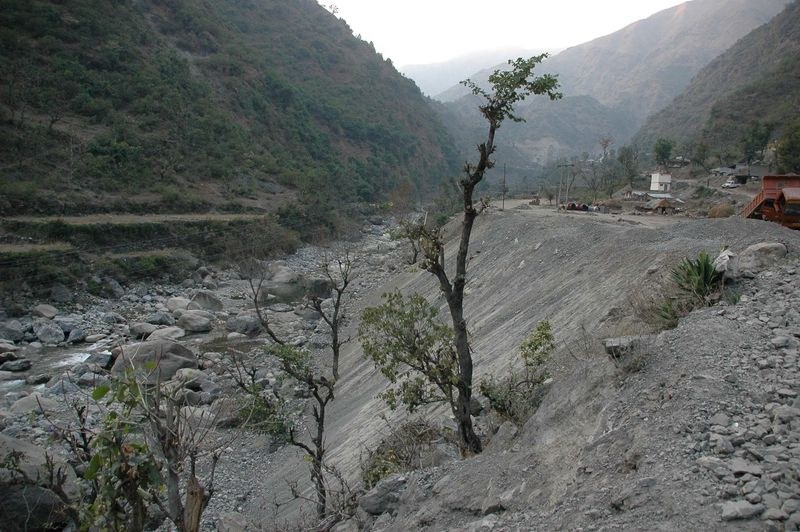
Visit any town in the state and it presents a picture of the total failure of urban and town planning. Villages, too, are gradually becoming replicas of these towns. A largely under-regulated and booming construction sector, along with massive infrastructure projects, endless hydropower projects, and highway construction, creates a never-ending demand for huge amounts of stone, sand and gravel.
To feed this frenzy, the mountains and rivers of the state are being hacked and plundered with impunity, without any regard for rules and regulations.These are not just words spoken in frustration but also observations made by the Comptroller and Auditor General (CAG) of India in its 2026 report for the period ended March 2023.
मुख्य विवरण
The report highlights glaring gaps in the state’s mineral extraction system.It states that during none of the five years from 2018-19 to 2022-23 did the Industries Department prepare the Annual Action Plans prescribed in its Office Manual. Without these year-wise roadmaps, statutory inspections, royalty assessments and project milestones under PMKKKY could not be systematically tracked. The report further states that evidence-based planning for mineral exploration, environmental safeguards, and revenue mobilisation was undermined because no comprehensive, scientifically derived inventory of the state’s mineral reserves was ever compiled in the four sampled districts, as required under national and state policy.According to the report, on-ground enforcement mechanisms were inadequate.
Despite statutory requirements and National Green Tribunal directives, there was no functioning Central Flying Squad, no GPS-based tracking of mineral transport, no District-Level Task Forces, and no operational Mining Surveillance System for minor minerals.
Key posts also remained chronically vacant.As a result, more than 40,000 cases of illegal or unauthorised mining were detected between 2018-19 and 2022-23, with more than 8,000 cases recorded in 2022-23 alone by the Police Department. A review of enforcement records for 2023-24 in four selected districts indicated pervasive weaknesses in the state’s control framework for minor mineral regulation. There was also a persistent and sizeable gap between inspection targets and achievements during 2018-23.The report observed that permanent boundary demarcation was absent at seven of the 10 geo-spatially examined sites and at 21 of the 26 inspected sites.
In leases located on hill slopes, operators had not provided the mandatory buffer strip, and excavation was found to be reaching or extending beyond lease boundaries.
पृष्ठभूमि और प्रभाव
Furthermore, six leases were extracting material outside their sanctioned coordinates.Most stone crushers in the state operate in an unscientific manner, making a complete mockery of the guidelines and directives issued by the Department of Environment, Science and Technology in 2021. These directives mandated several norms, including site suitability criteria, emission standards for PM2.5 and PM10, and pollution-control measures such as wind-breaking walls, dust-suppression systems, acoustic enclosures, green belts within and along the boundaries of the premises, separate energy meters for pollution-control devices, and rainwater-harvesting systems. At the last count, there were 448 registered stone crushers and 551 mining leases in the state, according to official data.
It is difficult to know how many stone crushers and mining operations are actually functioning on the ground.The government’s own Multi-Sectoral Committee, constituted after the disastrous 2023 monsoon, stated in its report that of the 131 stone crushers set up in the Beas River basin, 68 did not have the necessary permissions and only 50 operators were found to possess valid permits.
The report noted that the environmental balance of the Beas River basin is under immense pressure and requires scientific study. It also stressed the need for short, medium and long-term measures to regulate the operation of stone crushers. It is difficult not to believe that the system is complicit in this illicit trade.Despite the findings of the CAG and the government’s own committee and despite newspapers carrying reports on an almost daily basis, little change is visible on the ground.
Multiple matters relating to illegal mining in various rivers of the state are pending before the High Court of Himachal Pradesh and the National Green Tribunal.
These include cases concerning the Beas and Chakki rivers in Kangra district, Swan riverbed mining in Una’s Haroli and Gagret belt and Luhan Khad in Solan, among others.It is high time the state government ensured that the robust intent reflected in the regulatory framework for mineral management is translated into action on the ground by strengthening its enforcement and execution mechanisms.(The writer is a Natural Resource Management & Environment Law Consultant)The Baisakhi Sale Plan offers an excellent value of 2 years of subscription + 6 months complimentary.If you proceed with this purchase, your current monthly subscription plan will be immediately cancelled.