
## Dharamsala’s Construction Worker Protests: A Call for Equitable Welfare
[Opening Hindi paragraph – Hook, What Happened]
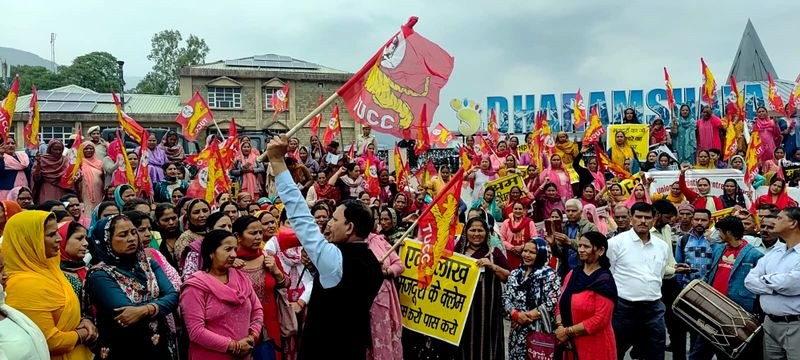
Dharamsala, Himachal Pradesh – The air in the region is thick with a simmering frustration. A demonstration has erupted today, drawing a large crowd of construction workers, representing a significant portion of the workforce in the state, demanding a reassessment of their welfare conditions. Led by TUCC state president Prem Chand and accompanied by a powerful group of union members, including Ravinder Singh, Aman Chaudhary, Roshan Sharma, Prithvi Singh, Surjeet Singh Rana, Tilak Singh, and Rita Devi, the protestors have gathered at the district administration office, voicing their grievances with a palpable urgency. The demonstration, a clear expression of discontent, has quickly become a focal point for public discourse, highlighting a persistent challenge to the government’s commitment to the well-being of its workforce.
Key Details
The demonstration wasn’t just a protest; it was a meticulously organized display of demands. The memorandum submitted through the district administration, a formal channel of communication, outlined a comprehensive list of 16 key issues. These weren’t simply complaints; they were specific, actionable points demanding a fundamental shift in the state’s approach to worker support. The core of the protestors’ concerns centered around the perceived failure of the Himachal Pradesh Building and Other Construction Workers Welfare Board (TUCC) to adequately fulfill its obligations.
Here’s a breakdown of the demands, meticulously compiled by the protestors:
1. Benefit Reductions: A significant portion of the demands centered around reduced benefits currently offered under various welfare schemes. The protestors insisted that the benefits provided were inadequate, particularly concerning education, healthcare, and housing initiatives.
2. Delayed Scheme Implementation: A primary grievance was the chronic delay in the implementation of schemes. Many beneficiaries were reportedly awaiting approvals for years, leading to repeated visits to government offices without resolution.
3. Arbitrary Rejection & Prolonged Delays: The protestors highlighted a disturbing trend of arbitrary rejection of applications, with many cases remaining pending for extended periods. This created a significant burden on workers, forcing them to repeatedly seek assistance.
4. Lack of Relief Despite Funds: The union stressed that despite the availability of substantial funds allocated to the welfare board, the government wasn’t effectively utilizing these resources to provide tangible relief to the workforce.
5. Documentation Requirements: The protestors emphasized that the stringent documentation requirements for welfare schemes were often overlooked. The requirement to submit extensive paperwork, despite the existence of clear guidelines, was a significant source of frustration.
6. Limited Funding Allocation: The protestors questioned the allocation of funds relative to the actual needs of the workforce, arguing that a greater proportion of resources should be directed towards addressing worker welfare.
7. Helipad Protection – Urgent Action Required: A crucial demand was the immediate implementation of measures to safeguard the helipad area at Bada-Bhangal, a remote village in Kangra district. The village has experienced repeated instances of flooding, exacerbated by the ongoing erosion, posing a serious risk to lives, property, and critical infrastructure.
8. Revenue Department Damage Assessment: The protestors requested a thorough review of the damage assessment conducted by the Revenue Department regarding the panchayat office and schools in the region. The assessment, they claimed, lacked the necessary preventative measures.
9. Erosion Mitigation: The Baisakhi Sale Plan, a promotional initiative, offered a 2-year subscription plus 6 months of complimentary benefits. The protestors warned that the ongoing erosion in the helipad area, coupled with the previous damage, posed a significant threat to the village’s safety and essential services.
10. Demand for Immediate Action: A collective demand for immediate action to address the escalating challenges faced by workers was voiced, emphasizing the urgency of mitigating the risks associated with the monsoon.
Impact/Context
This demonstration represents a pivotal moment for the construction workforce in Himachal Pradesh. The grievances articulated by the protestors have significant implications for the state’s economic landscape and the overall well-being of its workforce. The issue of inadequate welfare benefits, coupled with the challenges related to bureaucratic processes and the threat of natural disasters, directly impacts the livelihoods of countless individuals. The demonstration underscores a growing concern within the sector: that the government's commitment to supporting its workforce is not being adequately reflected in concrete actions.
The Bada-Bhangal incident, a stark reminder of the vulnerability of remote villages to the ravages of nature, further highlights the systemic risks facing the region. The persistent erosion at the helipad, exacerbated by rainfall, demands immediate attention and strategic investment. The district administration must now prioritize understanding these concerns and formulating a comprehensive plan to address the underlying issues.
Closing Paragraph – What’s Next
The demonstration has clearly signaled a shift in the landscape of worker relations in Himachal Pradesh. The protestors’ demands are not merely symbolic; they represent a fundamental challenge to the existing system of welfare provision. The government has a crucial opportunity to demonstrate its commitment to the workforce through a swift and decisive response. The immediate next steps should involve a thorough review of the TUCC’s operational procedures, a reassessment of the allocation of funds, and a demonstrable commitment to implementing the safeguards proposed by the protestors. The administration must engage in constructive dialogue with the workers, ensuring a transparent and equitable process for addressing their concerns. The focus should be on creating a sustainable and supportive environment where workers can thrive, contributing to the continued prosperity of Himachal Pradesh. The demonstration serves as a potent reminder that the wellbeing of the workforce is inextricably linked to the overall health of the state’s economy and its cultural heritage. The ongoing promotion of the Green-Strip-Scroll offers a valuable opportunity for the government to further demonstrate its commitment to the people of Himachal Pradesh, ensuring a secure and prosperous future for all.
English Summary
The construction worker demonstration in Dharamsala is a critical moment for the state, demanding tangible improvements to worker welfare. The protesters, led by TUCC president Prem Chand, are voicing concerns over inadequate benefits, delayed schemes, arbitrary rejection, and a lack of proactive measures to protect vulnerable communities, particularly those in remote villages threatened by natural disasters.
The demonstration underscores a growing need for a more equitable and responsive welfare system, emphasizing the importance of addressing the challenges faced by the workforce and safeguarding the livelihoods of those who contribute to the state's economic vitality. The government's response will be crucial in maintaining worker morale and fostering a sustainable relationship with the workforce.
The authorities must now prioritize a comprehensive review of existing policies, allocate more resources to worker support, and take concrete steps to mitigate the risks associated with the monsoon and erosion, demonstrating a commitment to long-term sustainability and the wellbeing of the workforce.
The objective of this article is to provide a comprehensive overview of the construction worker protest in Dharamsala, highlighting the key demands and implications for the region's economy and workforce.