
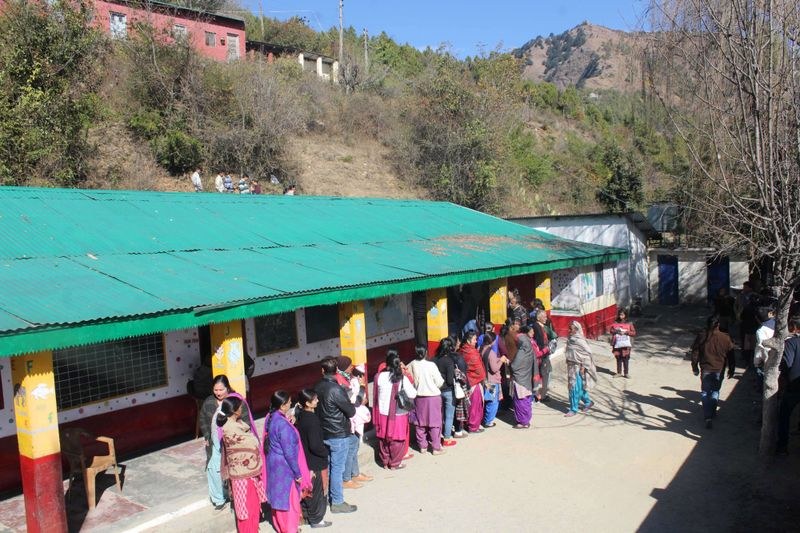
Traditionally, panchayats in Himachal Pradesh were viewed mainly as institutions for resolving local disputes, maintaining social harmony and implementing welfare schemes. However, the nature of governance in the Himalayan region has changed dramatically over the past two decades. Today, panchayats and gram sabhas stand at the centre of critical debates concerning sustainable development, environmental protection, climate change, disaster management and the protection of community resources. In a fragile mountain state like Himachal Pradesh, where hydroelectric power projects, four-lane highways, tunnelling work, tourism infrastructure and rapid urban expansion are increasing continuously, PRI representatives can no longer remain passive administrative actors. They are now expected to function as constitutionally aware and legally conscious custodians of ecological sustainability and local self-governance.
The urgency of this transformation becomes clearer when one examines the repeated climate disasters witnessed in the state in recent years and the present PRI elections are being held around four months late due to the enforcement of the Disaster Management Act (DMA) following widespread destruction due to natural disasters. Official reports reveal that floods, cloudbursts and landslides between 2023 and 2025 had caused unprecedented devastation in the state. These repeated disasters clearly show that environmental degradation and unscientific developmental practices are now immediate governance challenges affecting ordinary citizens at the grassroots level.
The constitutional and legal framework of India provides substantial scope for local participation in governance and natural resource management. The 73rd Constitutional Amendment transformed the PRIs into constitutionally-recognised bodies of local self-government. Article 243G empowers panchayats to promote economic development and social justice while the 11th Schedule includes subjects such as social forestry, watershed development, land improvement and natural resource management, thereby expanding the role of panchayats beyond welfare and administrative functions.
The Forest Rights Act (FRA)-2006 further recognises the role of gram sabhas in forest governance and community participation. It acknowledges both individual and community forest rights, including community forest resource rights under Section 3(1)(i). Section 6(1) identifies a gram sabha as the initiating authority for determining forest rights claims, while Section 4(5) protects forest dwellers from eviction before the completion of the recognition process. Similarly, under the Environment Protection Act-1986 and the Environment Impact Assessment (EIA) Notification of 2006, major developmental projects require environmental assessments and public hearings to ensure the participation of the affected communities, though such consultations are often criticised as procedural formalities.
The Panchayats Extension to Scheduled Areas (PESA) Act-1996 further strengthens the authority of a gram sabha in tribal regions by empowering it to safeguard community resources and mandating consultation before land acquisition and rehabilitation. Though, most parts of Himachal Pradesh are not scheduled areas, tribal districts such as Kinnaur and Lahaul-Spiti reflect the importance of participatory governance. The landmark Niyamgiri Hills Mining case reaffirmed that a gram sabha cannot remain merely symbolic and recognised the role of local communities in protecting ecological, cultural and livelihood rights. More recently, during hearings related to the Great Nicobar Project, the Supreme Court again emphasised the importance of a gram sabha’s consent and meaningful community participation in granting environmental and forest clearances, thereby reinforcing democratic accountability in environmental governance.
In Himachal Pradesh, the changing environmental and legal landscape demands a new kind of panchayati leadership. The PRI representatives today must understand environmental laws, disaster risks, forest clearances and sustainable planning practices alongside local governance. Gram sabhas should actively assess whether developmental projects threaten water sources, destabilise slopes or harm local livelihoods, while also ensuring compliance with environmental safeguards and rehabilitation measures. The future of the state depends on balancing development with ecological sustainability and community resilience. The PRIs play a vital role in strengthening grassroots-level democracy, environmental accountability and disaster preparedness. As the panchayat elections approach, voters must evaluate candidates not merely on political or social considerations, but on their constitutional awareness, environmental sensitivity and commitment towards sustainable development.
(The writer is faculty, Rural Development, Department of Interdisciplinary Studies, Himachal Pradesh University, Shimla)
The Baisakhi Sale Plan offers an excellent value of 2 years of subscription + 6 months complimentary.
If you proceed with this purchase, your current monthly subscription plan will be immediately cancelled.
30?"green-strip-scroll":""}">n ${e.display_status||e.scheduleTime}n
30?"green-strip-scroll":""}">n ${e.display_status+", "+e.scheduleTime}n