
English Summary
However, seismologists and disaster management experts believe that the recent earthquake should be viewed as a serious warning rather than an isolated event. Nature, they say, is repeatedly reminding us of the dangers associated with unchecked and unscientific construction activity in the fragile Himalayan region.The Kangra valley and surrounding Dhauladhar ranges fall in one of India's most earthquake-prone zones. The region's seismic history is a constant reminder of the devastating consequences of ignoring geological realities.
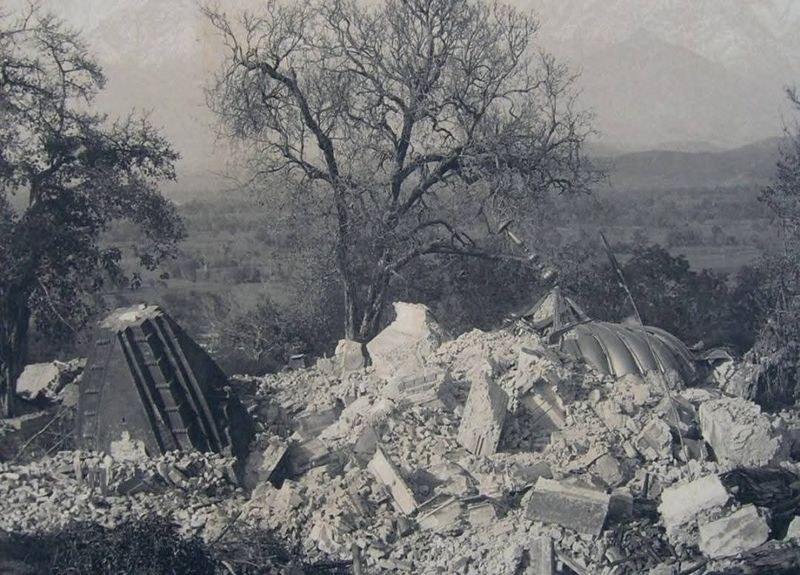
The most tragic example remains the 'Great Kangra Earthquake' of April 4, 1905.At a magnitude of 7.8 to 7.9, it was among the deadliest earthquakes in Indian history.
मुख्य विवरण
मुख्य विवरण
More than 20,000 people lost their lives, over 100,000 buildings were destroyed and historic landmarks, including the Kangra Fort and Brajeshwari Temple, suffered extensive damage.Despite the trail of loss left by the earthquake in the region, rapid urbanisation continues across the valley. Multi-storey hotels, commercial complexes and residential buildings are increasingly appearing on fragile hill slopes. Experts have expressed concern over permissions granted for high-rise construction in ecologically sensitive areas where the terrain is vulnerable to both earthquakes and landslides.The region has experienced several significant earthquakes since 1905.
A 6.4-magnitude earthquake struck Kullu in 1906.
पृष्ठभूमि और प्रभाव
In 1975, a 6.8-magnitude earthquake in Kinnaur caused widespread destruction and loss of life. On April 26, 1986, a moderate earthquake measuring 5.5 on the Richter scale shook Dharamshala and Palampur, while the 6.8-magnitude Chamoli earthquake of March 1999 in neighbouring Uttarakhand was strongly felt across Himachal Pradesh.Ironically, traditional Himalayan architecture had evolved over centuries to withstand seismic shocks. Construction techniques such as Kath-Kuni, which combines layers of wood and stone, and Dhajji-Dewari, which uses timber frames filled with masonry, offers flexibility during earthquakes and reduces the risk of collapse.
Modern construction practices can benefit greatly from incorporating these time-tested principles.Equally important is the need to regulate construction on steep slopes.
Indiscriminate hill cutting to accommodate heavy concrete structures weakens natural terrain stability and increases the likelihood of landslides during earthquakes and heavy rainfall. Building heights and loads must be determined according to the carrying capacity of the land.The recent earthquake may not have caused major destruction, but it has revived memories of the region's vulnerability. More than a century after the devastating 1905 disaster, an important question remains unanswered: Have we truly learned our lesson, or are we once again building our future on shaky ground?The Baisakhi Sale Plan offers an excellent value of 2 years of subscription + 6 months complimentary.If you proceed with this purchase, your current monthly subscription plan will be immediately cancelled.