
English Summary
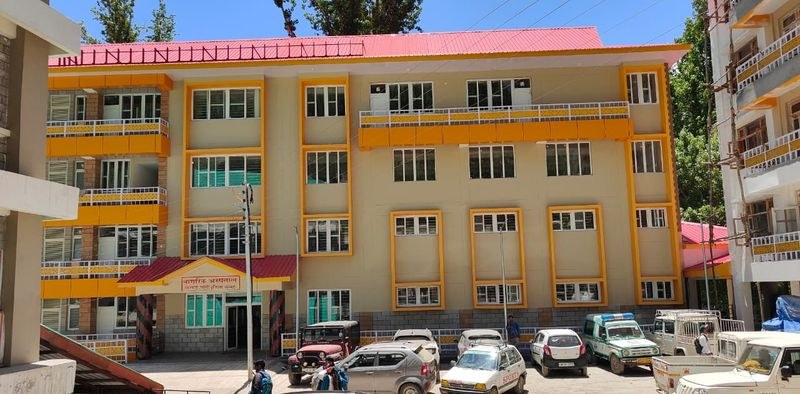
The issue has once again come into focus after the Chief Medical Officer (CMO), Chamba, formally wrote to the Director of Health Services, Himachal Pradesh, seeking the urgent deployment of specialist doctors at the Killar Civil Hospital, the valley’s largest healthcare institution. The communication paints a stark picture of the state of medical services and serves as an official acknowledgment of concerns that residents have raised for years, a severe shortage of doctors in one of the state’s most difficult and remote terrains.According to the letter, the Killar Civil Hospital caters to nearly 25,000 residents spread across the tribal valley. Despite serving as the region’s primary healthcare centre, the hospital is operating with only one specialist surgeon and three MBBS medical officers against 12 sanctioned doctor posts.
Eight positions remain vacant.
मुख्य विवरण
The letter also refers to the cancellation of a recently ordered posting of a specialist anaesthesia doctor, leaving the hospital once again without a critical specialist required for surgeries and emergency procedures.The situation highlights a familiar pattern that has characterised healthcare in many remote areas. While buildings, wards and infrastructure have gradually improved over the years, the human resources required to run these facilities effectively remain missing. Essential specialists in medicine, gynaecology and anaesthesia are unavailable, while shortages of nurses and paramedical staff further weaken service delivery.As a result, the responsibility of keeping the institution functional has fallen on a skeletal workforce.
The lone specialist surgeon reportedly handles duties that extend well beyond his designated role, often managing responsibilities that would normally require the services of an anaesthetist, physician and gynaecologist.
In a region where difficult terrain and harsh weather already pose significant challenges, such staffing gaps can have serious consequences for patient care.The crisis extends beyond the Killer Civil Hospital. Several Primary Health Centres and sub-centres across the valley are also struggling with shortages of medical personnel, limiting access to healthcare at the grassroots level. Residents of far-flung villages often have little choice but to travel long distances for treatment, a challenge that becomes even more daunting during winter months when snowfall and road closures cut off large parts of the valley.The consequences are most visible during medical emergencies.
Pregnant women requiring specialised care, accident victims, critically ill patients and those needing surgical intervention are frequently referred outside the valley.
पृष्ठभूमि और प्रभाव
However, referrals are not always practical. During winter, when the valley remains cut off for extended periods, access to higher medical facilities can become nearly impossible.The recent withdrawal of the anaesthesia specialist’s posting has deepened public frustration. Significantly, the posting had reportedly materialised after intervention linked to judicial proceedings, raising hopes that a longstanding gap in healthcare services would finally be addressed.
Its subsequent cancellation has reinforced a perception among many residents that Pangi’s healthcare needs continue to receive limited attention despite repeated assurances.However, the story is not solely one of governmental failure.
There is also a growing discussion within the valley regarding the role of society itself. Local sources point out that more than a dozen specialist doctors from Pangi are currently serving or pursuing careers outside the tribal region.Their decisions are understandable, shaped by aspirations for better professional opportunities, advanced medical facilities and improved living conditions. Yet the reality remains that their native valley continues to struggle with a severe shortage of specialists.The irony is difficult to ignore.
A region that has produced qualified medical professionals now finds itself dependent on a handful of healthcare workers to meet the needs of thousands.
The situation reflects a broader challenge confronting remote tribal areas across the Himalayan belt, where retaining skilled professionals often proves as difficult as creating infrastructure.The latest letter from the CMO is therefore more than a routine administrative request. It serves as an official reminder of a deeper governance challenge. The issue is no longer merely about constructing buildings or sanctioning posts; it is about ensuring that healthcare services actually reach the people they are intended to serve.For the residents of Pangi, the demand remains simple and fundamental.
They are not seeking super-speciality hospitals or cutting-edge medical facilities.
They seek basic healthcare services, specialist doctors and dependable medical care close to home. Until those needs are met, Pangi Valley will continue to stand as a reminder that in Himachal Pradesh’s farthest corners, geography still determines access to healthcare, and decades of neglect continue to carry a human cost.The Baisakhi Sale Plan offers an excellent value of 2 years of subscription + 6 months complimentary.If you proceed with this purchase, your current monthly subscription plan will be immediately cancelled.