
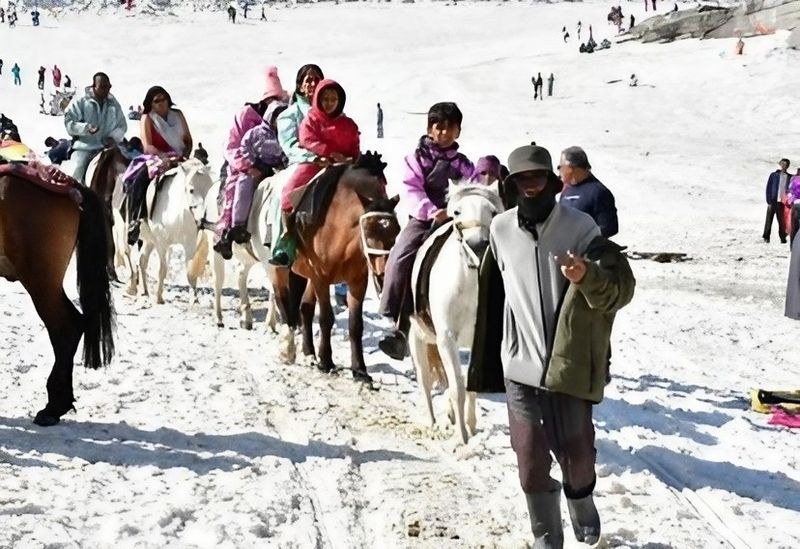
The service, which resumed on May 23, initially operated up to the snow point near Rohtang Pass at a fare of Rs 500 per passenger.
However, HRTC has now expanded the route beyond Rohtang towards Lahaul, enabling visitors to experience a wider circuit of scenic destinations in a single-day package.
The electric buses depart from Manali every morning between 7 am and 10 am. Owing to increasing tourist demand, HRTC has been operating between six and ten buses daily.
Rohtang Pass and the Atal Tunnel continue to rank among the most popular attractions for visitors arriving in Manali.
The tour covers Kothi, Gulaba, Marhi, Rahni Nala, Rohtang Pass, Gramphu, Koksar, Atal Tunnel Rohtang, Dhundi and Solang Nala before returning to Manali. The package offers tourists an opportunity to witness snow-clad landscapes, high mountain passes and the engineering marvel of the Atal Tunnel in a single journey.
The service is proving particularly attractive because of its affordability. While private taxis generally charge anywhere between Rs 8,000 and Rs 14,000 for a Rohtang excursion depending on the vehicle type and season, the HRTC electric buses provide a significantly cheaper alternative for budget-conscious travellers.
The growing popularity of the buses comes amid recurring concerns regarding the availability and misuse of Rohtang permits. Under National Green Tribunal (NGT) guidelines, only 800 petrol and 400 diesel vehicles are allowed to visit Rohtang Pass each day through an online permit system.
However, electric vehicles are exempt from the permit requirement. The buses themselves were introduced in line with the NGT’s efforts to reduce vehicular pollution in the ecologically sensitive region.
Over the years, reports have surfaced about tourists being overcharged due to the limited number of permits available for Rohtang.
Complaints of taxi operators charging exorbitant fares and instances of permit misuse prompted authorities to blacklist vehicles and strengthen monitoring measures.
In some cases, tourists reportedly paid several times the prescribed rates because of the scarcity of permits and high demand.
HRTC Regional Manager DK Narang said the steady rise in tourist arrivals had necessitated an increase in the number of electric buses to ensure that all visitors could avail themselves of the service.
He added that the corporation was committed to providing a convenient, affordable and environmentally friendly travel option for tourists visiting the region.
The Baisakhi Sale Plan offers an excellent value of 2 years of subscription + 6 months complimentary.
If you proceed with this purchase, your current monthly subscription plan will be immediately cancelled.