
Key Facts
On July 13, 2026, Jammu and Kashmir observed Martyrs Day, commemorating the 1931 uprising against Dogra Maharaja Hari Singh's rule. However, authorities imposed heavy security restrictions around the Mazar-e-Shuhada graveyard at Naqshband Sahib Shrine in Srinagar, barricading roads and deploying extra forces. Political leaders, including Chief Minister Omar Abdullah, were prevented from paying homage, sparking widespread criticism.
Details of the Restrictions
Security forces barricaded parts of old Srinagar since Sunday and set up barbed-wire fencing around the graves. Senior National Conference leader and minister Sakina Itoo attempted to reach the site at 4:30 a.m. wearing a burqa but was stopped. She stated, “Due to the heavy deployment of security forces and extensive barbed-wire barricading around the graves, I was prevented from entering. Physical barriers cannot prevent us from honouring the supreme sacrifices of our martyrs.”
Chief Minister Omar Abdullah criticized the Lieutenant Governor's administration, saying, “Such measures question all the claims made about normalcy in Jammu and Kashmir. On the ground, nothing appears normal. Not more than 150 would have assembled at the graveyard but they even fear that.” He added that those imposing restrictions are “guests and will go away,” while the graves remain.
Political Reactions
Abdullah rejected any religious coloring of the 1931 uprising, asserting, “People laid down their precious lives fighting against Britishers, British paramountcy in J&K, monarchy and for democracy. There was nothing religious about it.” He also dismissed BJP allegations of a split in the National Conference, calling it a tactic to hide behind courts.
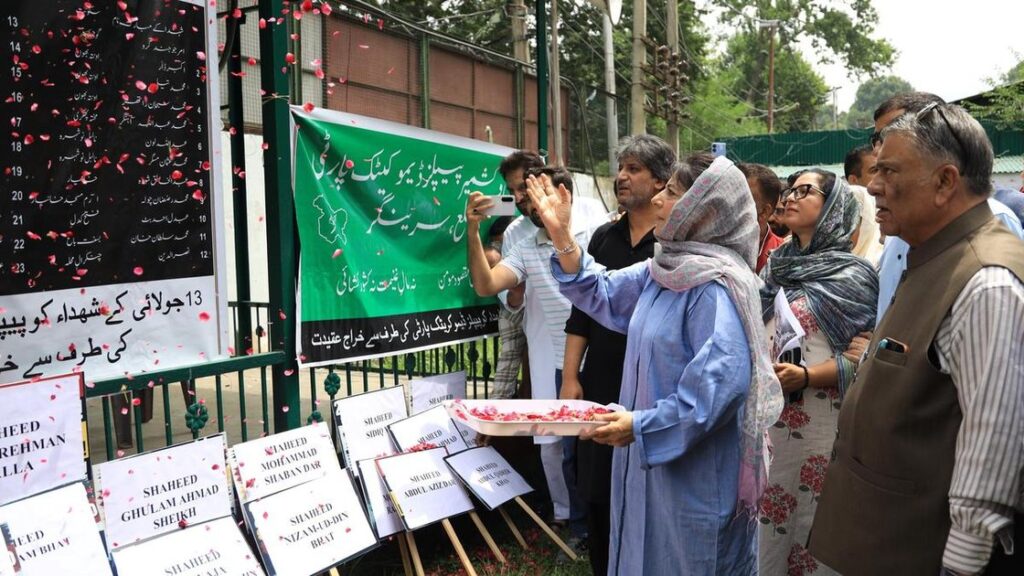
PDP president Mehbooba Mufti paid tributes at the party headquarters, stating, “These martyrs fought against the monarchy and oppression. Unfortunately, the BJP turned them into a Hindu-Muslim issue. They are our heroes like Bhagat Singh, Ashfaqullah Khan and Gandhi ji.” She accused the BJP of preventing tributes.
Kashmir's chief cleric Mirwaiz Umar Farooq claimed house arrest, saying, “It is painful that people are prevented by force from paying homage. All roads to Mazar-e-Shuhada are blocked and restrictions imposed around Jama Masjid.” He noted it was 95 years since the 1931 massacre.
Impact and What Readers Should Know
The restrictions highlight ongoing tensions in Kashmir, with leaders questioning the narrative of normalcy. The Centre ended J&K's special status in 2019 and dropped July 13 as an official holiday. The incident underscores the deep political divide over the legacy of the martyrs.
FAQ
- What is Martyrs Day in Jammu and Kashmir? July 13 commemorates the 1931 uprising against Dogra rule, where civilians were killed while protesting for rights and democracy.
- Why were restrictions imposed at Mazar-e-Shuhada in 2026? Authorities barricaded the graveyard and deployed security forces, citing security concerns, but leaders alleged it was to prevent tributes.
- How did political leaders react to the restrictions? CM Omar Abdullah and other leaders criticized the measures, saying they undermine claims of normalcy and dishonor the martyrs' legacy.