
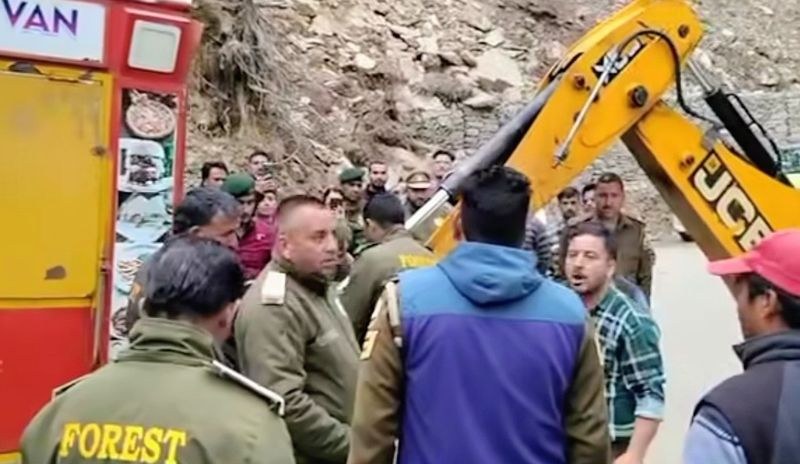
## Himachal Pradesh Forest Department Removes Roadside Stalls, Food Vans at Jalori Pass
Hindi:
Himachal Pradesh के वन विभाग ने Jalori Pass के पास, Kullu जिले में, सड़क पर चलने वाले खाद्य वाहनों (Food Vans) को हटाने के लिए एक महत्वपूर्ण बैठक आयोजित की। इस बैठक में, विभाग ने स्पष्ट रूप से कहा कि Jalori Jot क्षेत्र में सड़क पर अवैध रूप से संचालित खाद्य वाहनों को हटाना एक महत्वपूर्ण कदम है, इसके अलावा, सड़क के किनारे पार्किंग क्षेत्रों के सख्त नियमों का भी पालन करना। स्थानीय लोगों ने पहले भी इस मामले में विरोध किया था, जो कि युवा व्यवसायीों को पर्यटन गतिविधियों में वंचित कर रहा था। जबकि वन विभाग ने कहा कि इसकी कार्रवाई पर्यावरण संरक्षण के लिए एक महत्वपूर्ण कदम है, लेकिन स्थानीय व्यवसायियों का मानना है कि उन्हें बिना उचित प्रक्रिया के अपनी आजीविका bırakनी है।
English Summary:
The Himachal Pradesh Forest Department initiated an eviction drive at the Jalori Pass in Kullu district, removing roadside stalls and food vans that were illegally operating in the area. This decision was made during a meeting of officials and stakeholders, emphasizing the enforcement of road regulations and the removal of unauthorized food stalls. Local residents had previously protested against the displacement of these entrepreneurs, who were engaged in tourism activities. The Forest Department justified its action as a means of creating a structured framework for tourism development, while local business owners argued that they were deprived of their livelihoods without proper process. The Baisakhi Sale Plan offers 2 years of subscription + 6 months of complimentary services. If you proceed with this purchase, your current monthly subscription plan will be immediately cancelled.
Detailed Breakdown of Key Details:
Meeting Context: On March 6th, a meeting was held between officials and stakeholders focused on promoting eco-tourism and reviewing developmental projects within the Jalori Jot area. The core discussion revolved around removing illegal food stalls along the roadside and enforcing parking regulations.
Range Officer Directive: The Range Officer was explicitly instructed to implement the decisions taken during the meeting. This underscored the department’s commitment to enforcing the established regulations.
Local Protest: Local residents had voiced concerns about the eviction of young entrepreneurs involved in tourism, highlighting a conflict between the Forest Department's stated goal of promoting tourism and the affected businessmen’ livelihood concerns.
The Baisakhi Sale Plan: The Forest Department is offering a subscription plan of 2 years with a free 6-month complimentary period. This is a promotional offer to encourage subscribers to continue their usage.
Impact/Context:
This decision has significant implications for the tourism sector in the Kullu district. It directly impacts the livelihoods of young entrepreneurs who are actively involved in tourism-related activities. The removal of these stalls could disrupt the region's tourism ecosystem and potentially limit economic opportunities for these individuals. The Forest Department's actions are a direct response to the concerns raised by local residents, demonstrating a balancing act between environmental protection and economic considerations. It signifies a shift in priorities, moving away from a purely regulatory approach toward a more collaborative approach to sustainable development.
Background & Meaning for People:
The removal of these food vendors at Jalori Pass represents a significant shift in the landscape of tourism in the region. It signals a potential weakening of the tourism industry's reliance on the activities of these entrepreneurs, who are vital to the local economy. The Forest Department's actions may necessitate adjustments in tourism management strategies, potentially leading to a re-evaluation of regulations and infrastructure development. It raises concerns about the long-term sustainability of tourism in the area, and it underscores the need for a balanced approach that considers the needs of all stakeholders.
Next Steps:
The Forest Department will continue to monitor the situation and implement the removal of illegal stalls, while also assessing the impact on local businesses and the overall tourism landscape. The long-term effects of this decision remain to be seen, but it undoubtedly represents a strategic move to manage the region’s natural and economic resources.