
Key Facts
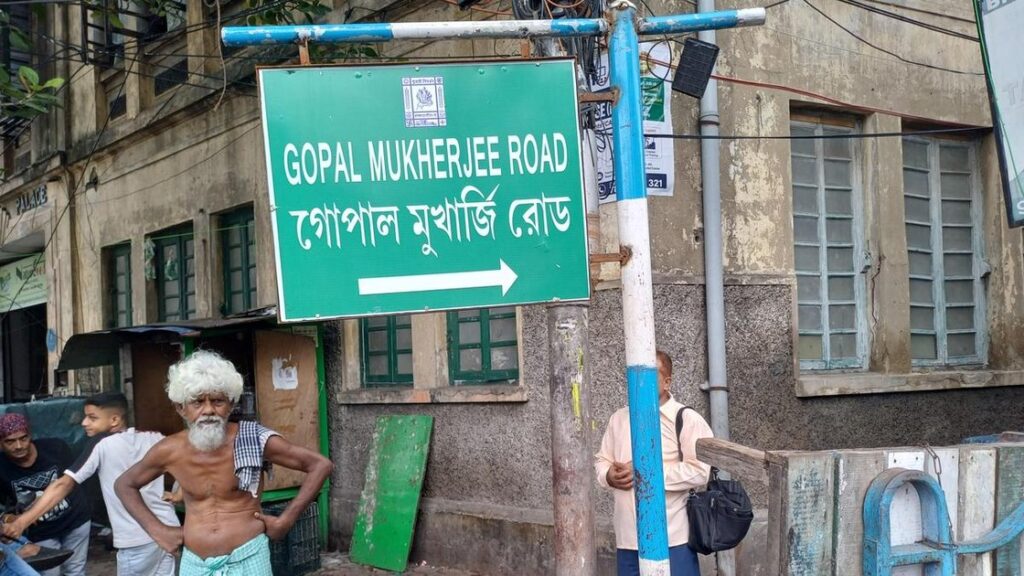
On June 20, the Kolkata Municipal Corporation (KMC) officially renamed Suhrawardy Avenue to Gopal Mukherjee Road. The decision, taken within six weeks of the BJP coming to power in West Bengal, has ignited a political firestorm over historical accuracy and electoral motives.
The road, a short 100-metre stretch near Park Circus 7 Point Crossing, now bears a fresh signboard in Bengali and English. It is named after Gopal Mukherjee, a local hero from north Kolkata who is remembered for protecting Hindus during the Great Calcutta Killings of 1946.
Details of the Renaming
The KMC notification was a single line: “Kolkata Municipal Corporation has decided that the road known as Suhrawardy Avenue in KMC area will be named and henceforth be known as Gopal Mukherjee Road.” Chief Minister Suvendu Adhikari hailed it as a historic correction, stating, “Finally restoration of historical justice will be achieved by honouring a true guardian and saviour.” He added that for decades, the road bore the name of someone who “wilfully misused state power as a weapon, orchestrating the massacre of innocent citizens for sheer political gain.”
However, historians point out that the original namesake was not Huseyn Shaheed Suhrawardy—the last Premier of undivided Bengal and later Prime Minister of Pakistan, whom the BJP blames for the 1946 riots—but his uncle, Sir Hassan Suhrawardy. According to P. T. Nair’s book A History of Calcutta’s Streets, the road was named after Hassan Suhrawardy, a two-time Vice-Chancellor of the University of Calcutta, a distinguished medical professional, and the first Muslim Deputy President of the Bengal Legislative Council. The name was notified on April 20, 1933.
Hassan Suhrawardy earned his knighthood for saving the life of Sir Stanley Jackson, the Governor of Bengal and Chancellor of Calcutta University, during a convocation attack by freedom fighter Bina Das on February 6, 1932. His bravery was rewarded by a special royal communiqué.
Political Reactions and Historical Debate
The renaming has drawn sharp criticism from opposition parties. Congress leader Pawan Khera cited Prime Minister Narendra Modi’s own praise for Hassan Suhrawardy in a book on Syama Prasad Mukherjee, accusing the BJP of ignorance. Former Rajya Sabha MP Jawhar Sircar tweeted, “Typical of the BJP’s abysmal ignorance to remove the name of Dr. Hassan Suhrawardy, first Muslim Vice-chancellor of Calcutta University when they targeted his nephew Huseyn Suhrawardy… Why don’t they read history sometime?”
BJP IT Cell chief Amit Malviya defended the move, arguing that both Suhrawardys were problematic: the uncle for his British association and the nephew for his role in the 1946 Direct Action Day riots. “As Premier of Bengal and a leading Muslim League politician, he presided over the province during the horrors of Direct Action Day on August 16, 1946,” Malviya wrote.
Declassified Cabinet papers from 2016 revealed that Huseyn Suhrawardy had claimed during meetings that the military was called promptly on August 17, and that he personally visited the police control room on the day the riots began.
Gopal Mukherjee’s Legacy and Family Reaction
Gopal Mukherjee, who ran a goat meat shop in north Kolkata, is celebrated by the BJP as a saviour of Hindus during the 1946 carnage. His family, living in Bowbazar, is pleased with the recognition but wary of political exploitation. Grandson Shantanu Mukherjee said, “Our grandfather was a patriot and revolutionist… We are happy that they took the initiative to name the road after him instead of Hassan Suhrawardy.” However, granddaughter Neeta Mukherjee urged, “We don’t want anyone to misuse the name for any political or any other interest.”
A 2025 film on Mukherjee has boosted his popularity, though the family was not consulted. Two biographies have been published recently, and three more are slated for release, including one on August 16—the anniversary of Direct Action Day.
Impact on Residents and the Bangladesh Deputy High Commission
Residents of the avenue, which houses fewer than 20 buildings including a school and college, remain unimpressed. Sheikh Ismail, a laundry shop owner who has lived there for 55 years, said, “Will this change of name make our lives any better?”
The most prominent building on the street is the colonial house of Hassan Suhrawardy, now the Library and Information Centre of the Bangladesh Deputy High Commission. Tarique Choyon, First Secretary (Press) of the commission, said no one has asked him to change the address from 3, Suhrawardy Avenue to 3, Gopal Mukherjee Road. He noted that Hassan Suhrawardy’s daughter was among Pakistan’s first women MPs, and a granddaughter is married into the Jordanian royal family.
What Readers Should Know
- The road was originally named after Sir Hassan Suhrawardy, not his nephew Huseyn, who is blamed for the 1946 riots.
- The BJP government’s renaming is seen as a political move ahead of the 2026 West Bengal assembly elections.
- Gopal Mukherjee’s family welcomes the honor but cautions against politicization of his legacy.
- Residents are largely indifferent, and the Bangladesh Deputy High Commission continues to use the old address.
Frequently Asked Questions
Why was Suhrawardy Avenue renamed?
The Kolkata Municipal Corporation renamed it to Gopal Mukherjee Road to honor Gopal Mukherjee, who is credited with saving Hindus during the 1946 Calcutta Killings. The BJP government claims it corrects historical injustice.
Who was the original Suhrawardy the road was named after?
The road was originally named after Sir Hassan Suhrawardy, a distinguished Muslim academic and former Vice-Chancellor of the University of Calcutta, not his nephew Huseyn Suhrawardy.
What is the controversy about?
Opposition parties accuse the BJP of historical ignorance, confusing Hassan Suhrawardy with his nephew Huseyn, who is blamed for the 1946 riots. Critics say the renaming is politically motivated ahead of the 2026 assembly elections.
What has been the public reaction?
Residents of the avenue are largely indifferent, questioning whether the name change will improve their lives. Gopal Mukherjee's family welcomes the move but cautions against political exploitation of his legacy.