
Key Facts
UNESCO has recommended a Green Education Model for Himachal Pradesh, shifting focus from mere environmental studies to practical climate solutions. The model, detailed in a recent report, aims to prepare students to understand and tackle the climate crisis. Education Minister Rohit Thakur confirmed that officials are studying the report for implementation.
Details of the Green Education Model
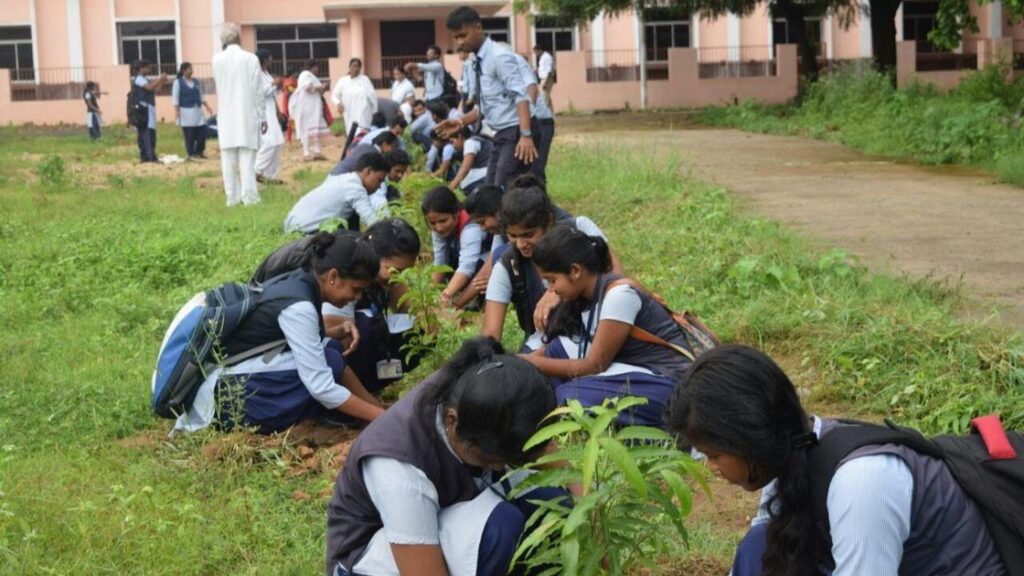
Himachal Pradesh, being at the heart of the Himalayan ecosystem, is experiencing the earliest and most intense impacts of climate change—landslides, receding glaciers, erratic rainfall, and flash floods. UNESCO considers the state an ideal laboratory for developing this model. The report advocates a 'Whole Institution Approach,' integrating school buildings, water conservation, energy management, waste disposal, biodiversity protection, and community participation into education. Students will learn climate solutions within their school premises, not just from textbooks.
Impact and Implementation
Under the joint initiative 'HP Future' by UNESCO and the Himachal Education Department, a study was conducted in about 200 schools across 12 districts over the past year. Over 500 teachers and more than 10,000 students participated. The report also praises existing state efforts, such as Mission Life, which has over 14,000 active eco-clubs inspiring students towards environmental conservation.
What Readers Should Know
UNESCO has recommended creating a separate 'Green School Quality Standard' for Himachal. Under this, schools will be evaluated not only on exam results but also on water conservation, energy savings, biodiversity, cleanliness, and student environmental awareness. If implemented, Himachal could become the first state in India to assess school quality based on climate responsibility.
FAQ
What is the UNESCO Green Education Model for Himachal?
UNESCO has proposed a Green Education Model that integrates climate solutions into school curriculum, focusing on practical learning through water conservation, energy management, waste disposal, and biodiversity protection.
How will schools be evaluated under this model?
Schools will be assessed not only on academic results but also on environmental criteria like water conservation, energy savings, biodiversity, cleanliness, and student environmental awareness.
How many schools and students are involved in the pilot?
Around 200 schools across 12 districts, with over 500 teachers and 10,000 students, have participated in the HP Future initiative under UNESCO and the state education department.
What is Mission Life in Himachal?
Mission Life is a state initiative with over 14,000 active eco-clubs that encourage students to engage in environmental conservation.