
Key Facts
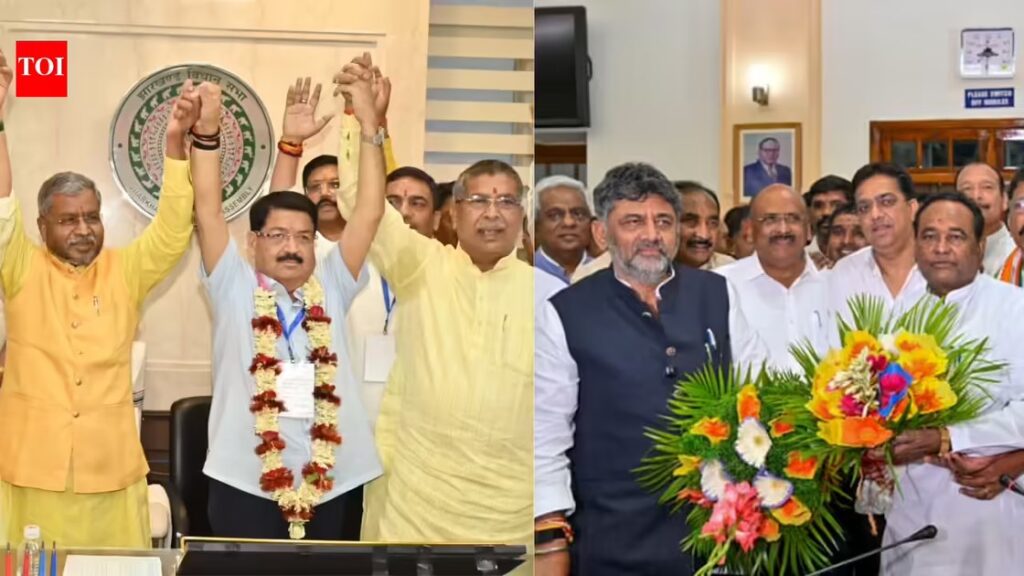
Cross-voting has emerged as a decisive factor in the ongoing power struggles in Karnataka and Jharkhand. In both states, rebel legislators from ruling parties have voted against their own government's candidates in recent assembly elections, triggering political crises.
Details of Cross-Voting Incidents
Karnataka
In Karnataka, at least 12 MLAs from the ruling coalition cross-voted during the recent Legislative Council elections, leading to the defeat of the official candidate. The rebel lawmakers are believed to be aligned with the opposition BJP, raising concerns about the stability of the Congress-led government.
Jharkhand
Similarly, in Jharkhand, cross-voting by several MLAs from the ruling alliance during the Rajya Sabha polls resulted in the victory of an opposition-backed candidate. The Jharkhand Mukti Morcha (JMM)-led government now faces a trust vote to prove its majority.
Impact on Power Dynamics
The cross-voting episodes have exposed deep fissures within the ruling coalitions. In Karnataka, the Congress leadership has initiated discussions with dissident MLAs to prevent further defections. In Jharkhand, the JMM has accused the BJP of poaching its legislators, while the BJP denies any involvement.
Political analysts suggest that these developments could lead to mid-term elections in both states if the ruling parties fail to manage internal dissent. The opposition BJP sees an opportunity to regain power in Karnataka and expand its footprint in Jharkhand.
What Readers Should Know
- Cross-voting is a legal but politically destabilizing tactic often used to topple governments.
- The anti-defection law allows for disqualification of MLAs who vote against their party whip, but delays in legal proceedings often allow defectors to remain in the assembly.
- Voters in both states are closely watching how their elected representatives navigate this crisis.
Frequently Asked Questions
What is cross-voting in elections?
Cross-voting occurs when a member of a political party votes against the party's official candidate or whip, often leading to defections and political instability.
Why is cross-voting significant in Karnataka and Jharkhand?
In both states, cross-voting by rebel MLAs has threatened the ruling coalition's majority, potentially leading to government formation changes or mid-term polls.
How does cross-voting impact governance?
It can destabilize governments, force confidence motions, and lead to realignments, affecting policy continuity and development projects.