
Key Facts
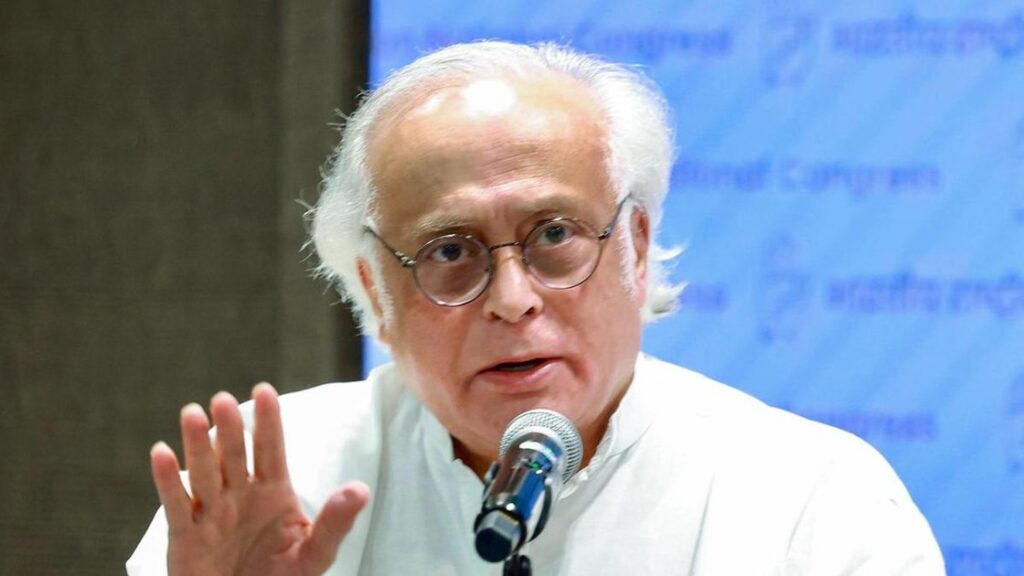
Congress leader Jairam Ramesh on Monday (June 15, 2026) launched a sharp critique of the Modi government's foreign policy, particularly its unconditional support for Israel. He warned that Pakistan's growing influence, combined with China's strategic embedding, presents a serious geopolitical challenge for India. Ramesh also welcomed the upcoming US-Iran peace deal but cautioned that India's structural economic problems remain unresolved.
Congress Slams Modi's Israel Policy
In a series of posts on X, Jairam Ramesh said, "It is too much to expect Mr. Modi to rethink his blind devotion and unconditional support to Israel. But humanitarian considerations and long-standing commitments apart, our national interest demands greater balance than Mr. Modi has shown." He noted that the current war in West Asia began just two days after Prime Minister Modi's visit to Israel, and that India's economic woes predate the conflict.
Pakistan's Rising Influence
Ramesh claimed that Pakistan, which had been successfully isolated by India after the 2008 Mumbai terror attacks, now seems to have acquired new regional and global influence. "This, coupled with China's deep embedding in Pakistan's strategic apparatus, poses a formidable geo-political challenge for India's foreign policy," he said.
US-Iran Peace Deal Welcomed
The Congress leader welcomed the news that the US and Iran will sign an agreement on June 19 in Geneva to halt hostilities in West Asia. "There is universal hope that the two countries (as also Israel) will abide by the accord — even though it is of an interim nature — and that the accord will lead to a more permanent normalization," he said. The deal was announced by Pakistan Prime Minister Shehbaz Sharif, who thanked the US, Iran, and Qatar for their mediation.
Economic Concerns Remain
While the reopening of the Strait of Hormuz will bring relief to India, Ramesh argued that structural economic problems persist. He pointed to sluggish demand, stagnating real wages, a record trade deficit due to Chinese imports, and an investment climate vitiated by unchecked tax and investigative powers. "Rates of private investment — a most crucial determinant of GDP growth — have been tepid for many years," he said.
What Readers Should Know
- The US-Iran peace deal is expected to be signed on June 19 in Switzerland, with both sides declaring an immediate and permanent termination of military operations.
- The conflict began after US and Israeli attacks on Iran on February 28, which killed several top Iranian leaders, including Supreme Leader Ayatollah Ali Khamenei.
- Iran's new supreme leader, Mojtaba Khamenei, has not been seen in public since the war began.
FAQ
What did Congress leader Jairam Ramesh say about PM Modi's Israel policy?
He said it is too much to expect Modi to rethink his blind devotion and unconditional support to Israel, and that India's national interest demands greater balance.
What is the US-Iran peace deal announced by Pakistan PM?
Pakistan PM Shehbaz Sharif announced that a peace deal between the US and Iran has been reached, with an official signing ceremony scheduled for June 19 in Switzerland.
How does Pakistan's rising influence affect India?
According to Jairam Ramesh, Pakistan's new regional and global influence, coupled with China's deep embedding in its strategic apparatus, poses a formidable geopolitical challenge for India.