
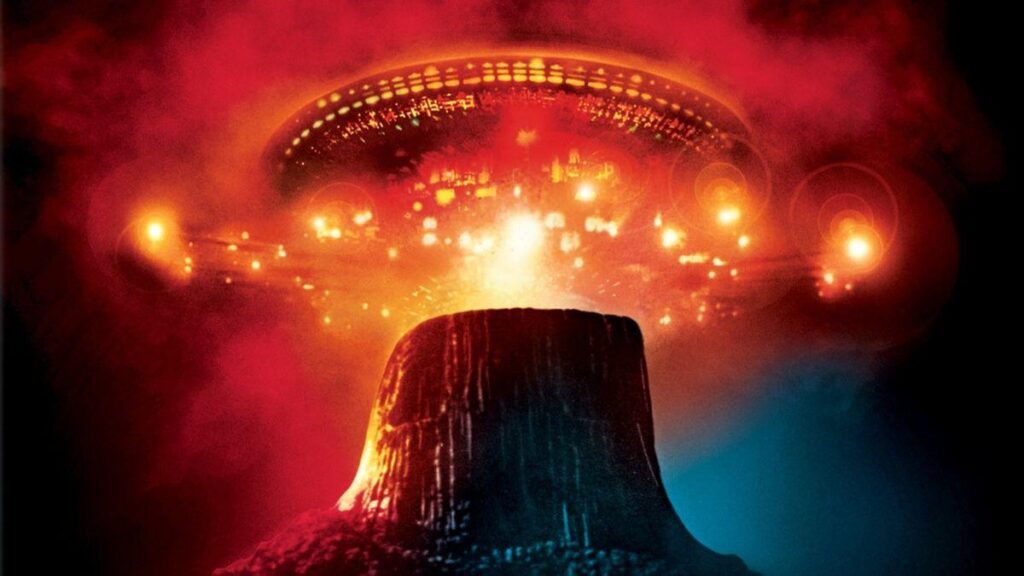
Steven Spielberg's new alien film Disclosure Day marks his return to the genre that defined his career. From H.G. Wells to Denis Villeneuve, first-contact cinema has mirrored humanity's deepest anxieties and aspirations about the unknown.
When Steven Spielberg releases Disclosure Day this week, his first alien film in over two decades, he returns to the obsession that helped define his career. The veteran filmmaker transformed Devils Tower, Wyoming into a beacon for cosmic pilgrims in Close Encounters of the Third Kind and turned a homesick alien into a beloved icon in E.T. the Extra-Terrestrial. Now, with unidentified aerial phenomena (UAP) moving from grainy footage to U.S. congressional hearings, Spielberg's prodigal arrival coincides with a broader public reckoning: are we alone?
Key Points
- Spielberg's Disclosure Day releases this week, his first alien film in 20+ years.
- First-contact cinema evolved from invasion fears to communication and mystery.
- Films like Arrival and Close Encounters focus on language and wonder.
- Non-Hollywood films like Solaris and District 9 offer unique perspectives.
- Each era projects its own fears and hopes onto extraterrestrials.
The earliest modern template came in 1898 when H.G. Wells published The War of the Worlds. Wells understood that the terror of contact emerged from powerlessness. His Martian invaders treated humanity with the brutal apathy European empires showed colonised peoples. Alien invasion cinema throughout the 20th century inherited those anxieties, with the Cold War accelerating the trend. American sci-fi films of the 1950s turned extraterrestrials into vessels for political paranoia, as seen in Don Siegel's Invasion of the Body Snatchers, which reflected fears of communist infiltration.
By the late 1960s, first-contact cinema began asking different questions. Stanley Kubrick's 2001: A Space Odyssey abandoned invasion for cosmic mystery, with alien presence manifesting through monoliths. Spielberg's Close Encounters of the Third Kind (1977) rewrote the grammar of alien cinema, turning the climax into a moving duet between a synthesiser and a spacecraft via a five-note melody. That idea reached its fullest expression in Carl Sagan's Contact and Denis Villeneuve's Arrival, both recognising that contact begins with communication.
First contact has also drawn from UFO folklore. M. Night Shyamalan's Signs uses crop-circle paranoia, while Andrew Patterson's The Vast of Night recreates 1950s switchboard operators. Andrei Tarkovsky's Solaris depicts contact as a confrontation with memory, and Neill Blomkamp's District 9 frames aliens through apartheid. Cixin Liu's The Three-Body Problem introduces the Dark Forest hypothesis, suggesting silence may be the universe's survival strategy. This evolution shows why first-contact stories keep finding new life—every era imagines the alien through its own preoccupations.