
Kane Parsons' feature adaptation of the viral 'Backrooms' creepypasta is a mesmerising exploration of liminal spaces and internet-age fears. Starring Chiwetel Ejiofor, the film follows a furniture store owner who discovers a dimension of endless rooms, blending nostalgia with profound loneliness.
When Kane Parsons released his viral YouTube series on the Backrooms, he tapped into a collective subconscious fear of liminal spaces. Now, his feature film adaptation for A24 brings that dread to the big screen with astonishing fidelity. The film follows Clark (Chiwetel Ejiofor), a failed architect turned furniture store owner, who stumbles upon a hidden dimension of endless yellow rooms beneath his shop in 1990s California.
A Masterclass in Spatial Horror
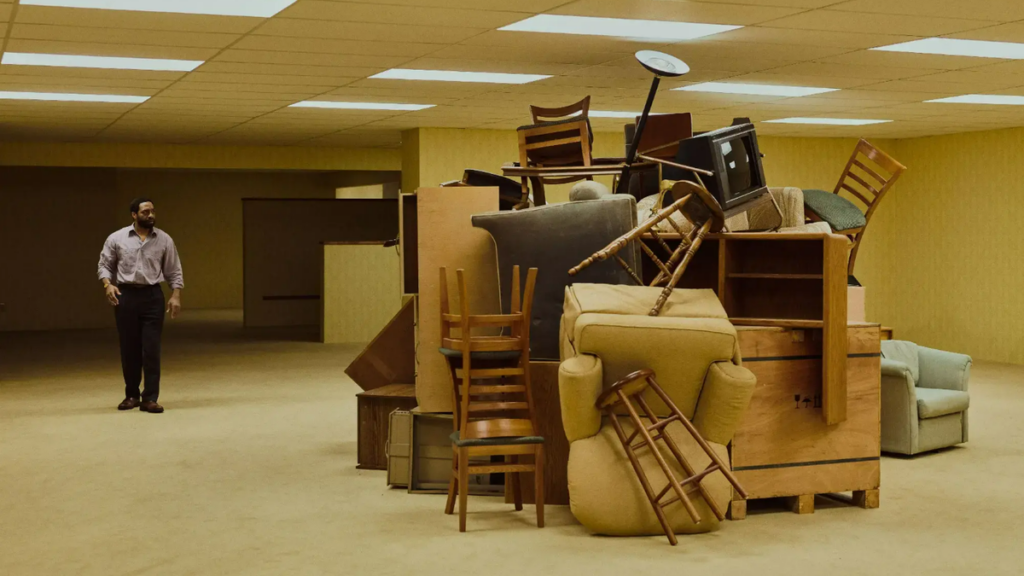
Parsons, just 20 years old, has crafted one of the most persuasive acts of spatial horror in recent memory. Working with production designer Danny Vermette, he visualises the Backrooms as a world assembled from half-remembered instructions about reality. The set design is ingenious, featuring glitched furniture and submerged domestic detritus that evoke the creepypasta's concept of 'noclipping' from reality. Jeremy Cox's found-footage cinematography compounds the unease with compositions that deny spatial certainty.
Key Points
- Kane Parsons adapts the viral Backrooms creepypasta into a feature film for A24.
- Chiwetel Ejiofor stars as Clark, a furniture store owner who discovers a liminal dimension.
- The film explores themes of loneliness, obsession, and the subconscious mind.
- Parsons' background in YouTube horror shorts influences the film's found-footage style.
- Backrooms is a postmodern take on ancient fears of being lost, both physically and epistemologically.
A Lonely Journey into the Unknown
Clark initially approaches the Backrooms with architectural curiosity, mapping its endless rooms and reporting his findings to his therapist, Dr. Mary Kline (Renate Reinsve). Ejiofor portrays a manic enthusiasm that slowly curdles into obsession. As Clark spends more time in the labyrinth, his interest in the outside world wanes, highlighting the profound loneliness at the film's core.
The final act sees Mary venturing into the Backrooms to find Clark, leading to a commentary on trauma and the subconscious. A striking sequence involving a static shot descending through layers of a house, each more abstract than the last, suggests the Backrooms are a manifestation of buried memories. While the film's attempts at explanation can feel clunky, its emotional resonance is undeniable.
A Nostalgic Dreamscape
What makes Backrooms so viscerally effective is its nostalgic quality. Parsons channels the wistful wavelength of early-2000s dreamcore, creating images that feel like remembering something you never experienced. The film resists easy intellectual dissection but communicates with remarkable clarity on an emotional level. For those raised on internet lore, this is a hauntingly familiar descent into the horrors of the digital age.