
Key Facts
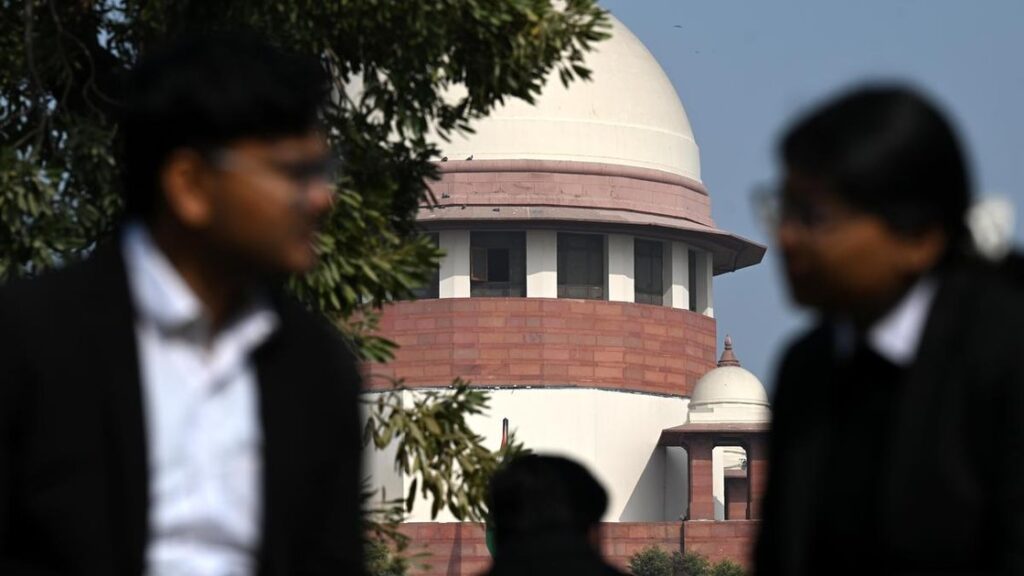
The Supreme Court on July 14, 2026, questioned the Central Board of Secondary Education (CBSE) over its classification of English as a 'non-native' language in the three-language scheme. A three-judge bench led by Chief Justice Surya Kant heard arguments from parents and students challenging the policy's implementation.
Court's Observations
Justice Joymalya Bagchi asked, "Can India consider English as an indigenous Indian language?" He noted that the term 'native' used by CBSE carries colonial connotations and is not found in the Constitution or statutes, which use 'mother tongue', 'regional language', or 'Indian language'. However, he acknowledged that the three-language scheme aligns with the constitutional goal of promoting Indian languages for official purposes.
Petitioners' Arguments
Senior advocate Gopal Sankaranarayanan, representing parents and students, highlighted severe resource constraints: out of 22 Scheduled languages, textbooks are available only for three, and schools would need 22 additional teachers each. He called it a "complete impossibility of human resources." Senior advocates Mukul Rohatgi and Shyam Divan echoed concerns, noting that students in Classes 5, 6, and 9 face undue pressure to learn new languages. The scheme, originally set for 2030, was advanced to 2026-2027.
CBSE and NCERT Response
In an affidavit filed on July 13, CBSE acknowledged potential resource shortages but proposed flexible staffing: engaging existing teachers with functional proficiency, retired teachers, and qualified postgraduates, along with Sahodaya clusters and virtual/hybrid teaching. CBSE claimed that 47.3% of schools already offer two or more Indian languages without needing extra teachers, and 99.9% have at least one Indian language teacher. NCERT stated it has prepared textbooks in 22 languages, with learning material for Hindi, Sanskrit, Marathi, and Urdu already uploaded; materials for remaining languages will be ready by end of July 2026.
Impact and Next Steps
The court issued notice and listed the next hearing on July 22. The three-language policy is part of the National Education Policy 2020 and National Curriculum Framework for School Education 2023, aimed at promoting multilingualism. The Centre supported CBSE, stating the policy serves "legitimate public objectives."
What Readers Should Know
- The Supreme Court is scrutinizing CBSE's classification of English as 'non-native' in the three-language scheme.
- Petitioners argue that implementing the scheme without adequate resources harms students.
- CBSE and NCERT have proposed interim measures, but the court will decide on further action.
Frequently Asked Questions
What did the Supreme Court question about CBSE's three-language scheme?
The Supreme Court questioned CBSE's classification of English as a 'non-native' language, asking whether English could be considered an indigenous Indian language given its long usage in the country.
What is the three-language scheme?
The three-language scheme is a policy under the National Education Policy 2020 requiring students to learn three languages, including at least two Indian languages. CBSE's circular differentiates between 'Bharatiya Bhashas' and 'non-native' languages like English.
What challenges were highlighted in implementing the three-language scheme?
Senior advocates pointed out lack of textbooks and teachers for all 22 Scheduled languages, calling it a human resource impossibility. CBSE acknowledged the crunch but suggested interim measures like engaging retired teachers and virtual teaching.
When is the next hearing scheduled?
The Supreme Court listed the next hearing on July 22, 2026.