
Key Facts
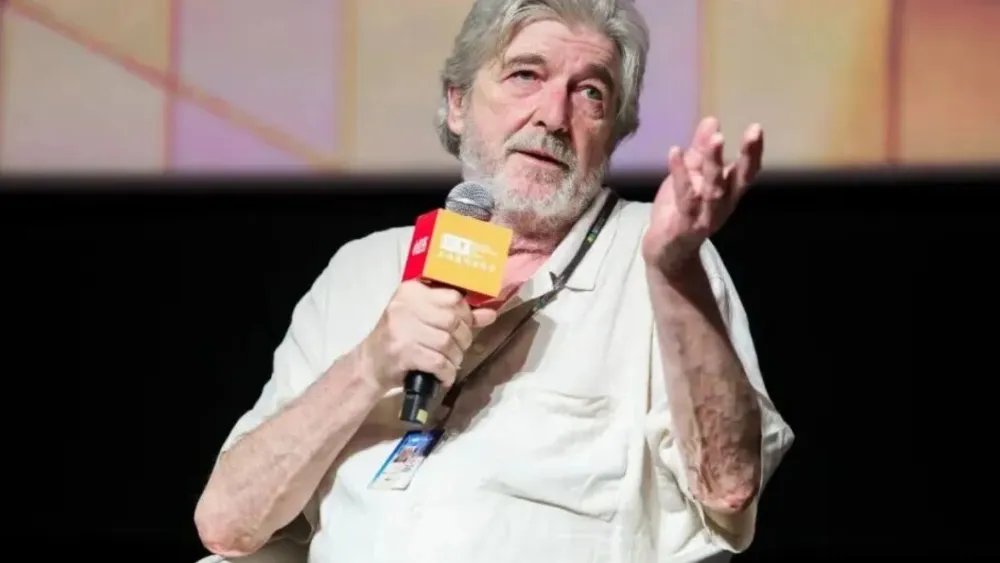
Hungarian composer, actor and screenwriter Mihály Víg, the longtime creative partner of director Béla Tarr, conducted a masterclass at the 28th Shanghai International Film Festival following a screening of 'The Turin Horse.' Víg has scored Tarr's films for over four decades, starting with 'Almanac of Fall' in 1984.
Details of the Masterclass
Víg explained that his collaboration with Tarr began when the director tracked him down after seeing him in a friend's concert footage. Their first meeting was brief, sealed over champagne. Víg had no prior film scoring experience, making 'Almanac of Fall' a steep learning curve due to its documentary style and improvised performances.
Their workflow is unconventional: Víg completes every composition before principal photography, working solely from the screenplay. He starts with the overall emotional impression the script leaves. 'I listen deep within myself, waiting for inspiration and quietude to descend,' he said, quoting a documentary about 'The Turin Horse.'
Víg, Tarr, and screenwriter László Krasznahorkai share a belief that people avoid confronting existence's true nature. This alignment means revisions are rare. Tarr trusts Víg's instincts, though Víg delivers several iterations for the director to choose from.
Impact and Philosophy
Sound extends beyond music for Víg. He cited the relentless rain in 'Sátántangó' and howling wind in 'The Turin Horse' as integral sonic elements. 'If we quiet our minds and truly listen, we can call them beautiful music,' he said.
Víg also performed in Tarr's films, notably as the con man in 'Sátántangó,' a role requiring memorization of over thirty pages of script for an uninterrupted dialogue sequence. He noted Tarr's casting approach: finding individuals who embody characters, mixing professionals and amateurs while demanding naturalism.
Contrary to perceptions of Tarr as a tyrant, Víg described him as mild-tempered, never raising his voice, and addressing grievances privately. Tarr's long takes, influenced by Hungarian director Miklós Jancsó, mirror uninterrupted lived experience.
Reflecting on 'The Turin Horse's' bleak minimalism, Víg rejected nihilistic readings. He distinguished between Kundera's 'lightness' and Tarr's 'heaviness,' arguing tragedy contains comedy. 'It is akin to catharsis. By the end, everything feels cleansed... Life is undeniably harsh, yet it also holds profound beauty.'
Behind-the-scenes anecdotes included Krasznahorkai leaving an argument with Tarr and returning two days later with a sixty-page short story that became 'The Turin Horse.' The production also searched for a horse with a sorrowful gaze and ensured its comfortable retirement.
What Readers Should Know
Víg named 'Damnation' and 'The Turin Horse' as his favorite scores, and 'Sátántangó' as his top Tarr film. For those daunted by its seven-hour runtime, he advised pushing through the first hour. He closed with Tarr's philosophy: 'Life is a gift, and it would be discourteous to turn that gift away.'
FAQ
How did Mihály Víg start working with Béla Tarr?
Tarr discovered Víg in a friend's concert footage in 1984 and invited him to score 'Almanac of Fall' over a glass of champagne.
What is Víg's process for composing film scores?
Víg completes all music before filming begins, working from the script's emotional impression. He listens within himself for inspiration.
Which films did Víg name as his personal favorites?
He named 'Damnation' and 'The Turin Horse' as favorite scores, and 'Sátántangó' as his top Tarr film.