
The central government has exempted excise duty on petrol blended with 22% to 30% ethanol, aiming to promote biofuels and avoid dual taxation. Industry bodies welcome the move as a signal of policy stability, urging states to align tax structures.
The central government late Wednesday exempted central excise duty on petrol blended with higher ethanol concentrations, ranging from 22% to 30%. The decision aims to popularise biofuels and remove tax barriers for higher ethanol blends.
Key Points
- Excise duty exemption applies to petrol blends with 22%, 25%, 27%, and 30% ethanol.
- Bureau of Indian Standards (BIS) notified fuel standards for these blends on May 19, 2026.
- Higher blends are not yet commercially available; rollout requires further testing.
- Exemption prevents dual levy: petrol already bears excise duty, ethanol bears GST.
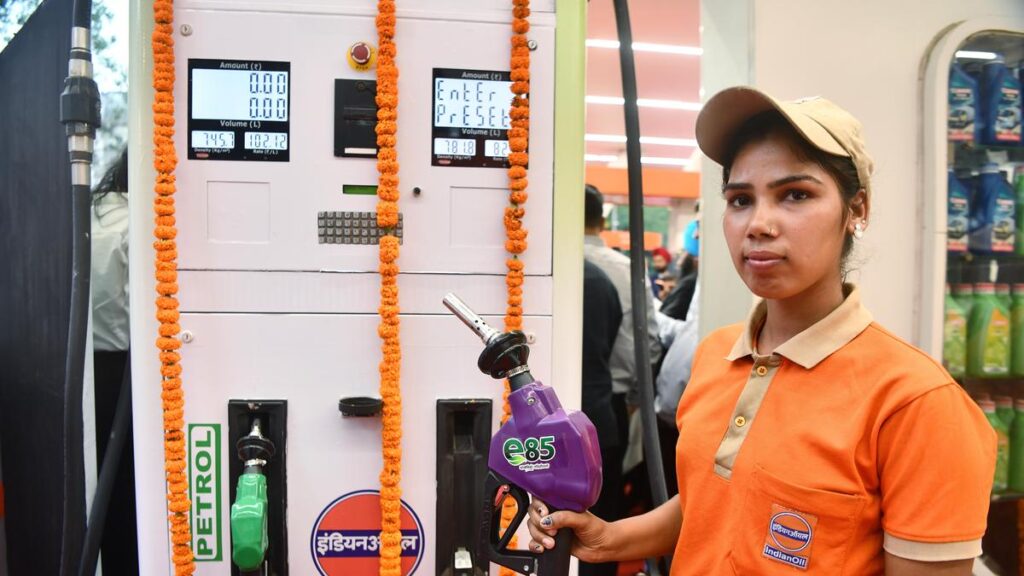
- E85 (85% ethanol) launched on June 5, priced ₹20/litre cheaper than E20.
The government clarified that the exemption is a preliminary step and does not indicate immediate rollout of higher blends. "This is a prerequisite for eventually introducing higher blends but doesn't convey anything about roll out as of now," the statement said. The move specifically addresses the blending activity, which is considered manufacturing, to avoid double taxation.
Industry associations welcomed the decision. C.K. Jain, President of the Grain Ethanol Manufacturers Association (GEMA), called it "a strong signal of policy stability and long-term commitment" essential for attracting investments across the ethanol value chain, including production, logistics, storage, and flex-fuel mobility.
Bharati Balaji, Deputy Director General at the All-India Distillers Association (AIDA), urged state governments to complement the measure with aligned tax structures so that the full benefit reaches industry and consumers at the pump. The exemption follows the June 5 launch of E85 petrol, which is about ₹20 per litre cheaper than the regular E20 variant.