Category: Technology News
The Telecom Regulatory Authority of India (TRAI) has proposed a new framework for satellite communication providers in India. The recommendations, released on 5 November 2026, would create a separate Satellite Communication Network (SCN) Provider Authorisation under Section 3(1)(b) of the Telecommunications Act, 2023.
The framework matters for companies such as Starlink, Jio Satcom and Eutelsat OneWeb, which are all targeting India’s satellite connectivity market.
The key proposals
- Authorisation period: up to 20 years, renewable for another 20 years, covering the whole country.
- Authorisation fee: 8 percent of Adjusted Gross Revenue (AGR), with no minimum fee.
- Spectrum charge: minimum ₹3,500 per MHz per year for FSS and MSS spectrum assigned administratively.
- Spectrum assignment: administratively (not by auction), for up to 5 years, extendable by 2 years.
- Entry fee: ₹37.5 lakh, with an application processing fee of ₹10,000 and an initial guarantee of ₹45 lakh.
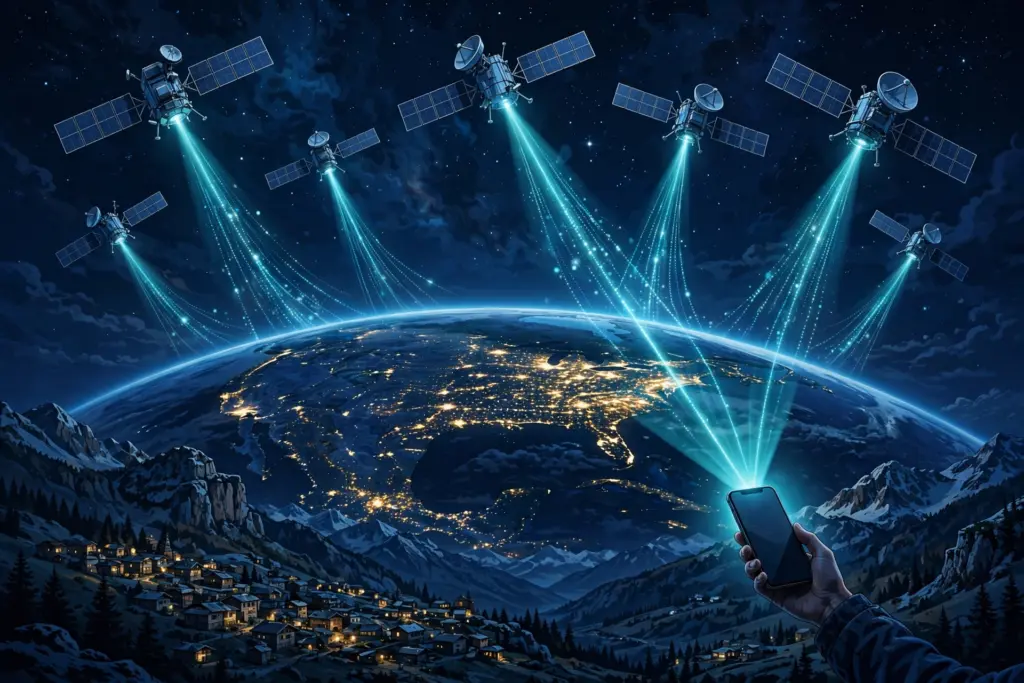
- Services covered: Fixed Satellite Service (FSS), Mobile Satellite Service (MSS) and direct-to-device (D2D) connectivity — satellite-to-phone services using MSS or IMT spectrum.
What SCN providers can and cannot do
Under the proposal, SCN providers would supply network capacity to telecom operators and other eligible service providers as Satellite Communication Network as a Service (SCNaaS). They would not be allowed to sell telecom services directly to consumers under this authorisation.
That means Jio, Airtel and Vodafone Idea could buy satellite capacity and offer satellite-to-phone services to their own customers, using their mobile spectrum. The telcos would hold a say in how D2D services work.
TRAI received comments from 31 stakeholders and counter-comments from 12 before finalising the proposals, after a consultation paper in April 2026 and an open house discussion on 2 July 2026. The Department of Telecommunications had asked TRAI to frame the terms in July 2025.
Not final policy yet
These are recommendations, not final policy. The Department of Telecommunications and the Central Government must still consider them and take a decision. Until then, Starlink’s India launch continues to face regulatory hurdles, including national security concerns raised by the government.
For Himachal, the framework matters because satellite connectivity could reach remote valleys where mobile towers are hard to build — but only after the rules are finalised and the services are actually switched on.
Source: The Hindu BusinessLine report on TRAI’s recommendations, 5 November 2026; TRAI consultation record, 5 November 2026.
Related articles on HimachalGovt
- Starlink India Pricing Leaked: ₹33,000 Kit and ₹3,000-a-Month Plans Reported, Launch Date Still Not Confirmed — https://himachalgovt.com/stories/starlink-india-pricing-33000-kit-3000-month-report
- iOS 26.2 Beta: New Features and December Release — https://himachalgovt.com/stories/ios-26-2-beta-new-features-december-release
- Anthropic Files for IPO on Nasdaq Under Ticker ANT, Revenue Hits $17 Billion — https://himachalgovt.com/stories/anthropic-ipo-s1-nasdaq-ant-revenue-17-billion