Category: News
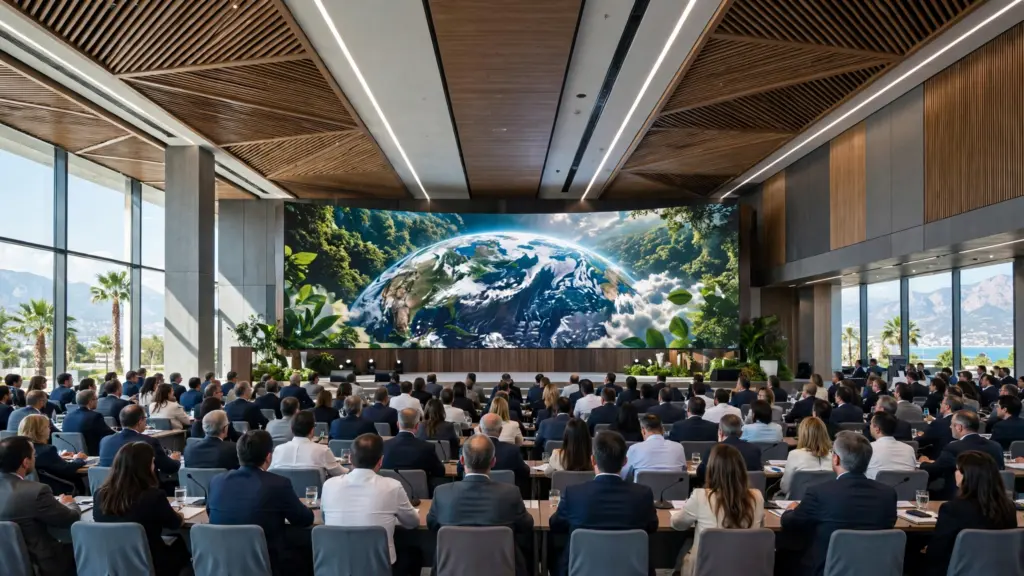
The COP31 UN climate summit opens in Antalya, Türkiye, on Monday, 9 November 2026, and runs until 20 November. It is the first COP held in the era of climate overshoot, with the 1.5°C warming limit now almost certain to be breached.
Türkiye is hosting the summit, with Environment Minister Murat Kurum as COP president, while Australia runs the formal negotiations, led by Climate Change and Energy Minister Chris Bowen. The unusual shared arrangement was agreed last year after both countries sought the presidency.
A “COP of implementation”
Türkiye has billed the summit as a “COP of implementation”, focused on turning years of climate commitments into concrete action rather than new pledges. The summit has five priorities: accelerating electrification, turning climate commitments into bankable projects, mobilising public and private finance, strengthening climate adaptation, and protecting oceans.
The host’s flagship proposal is a voluntary global goal to raise the share of final energy demand met by electricity from just over 20 percent, as of June 2026, to 35 percent by 2035. It is expected to be formally launched on Energy Day, 10 November, with the list of countries that have signed up.
The leaders’ segment takes place on 11 and 12 November. The early speaking list is low-key, with the biggest names including Brazil’s President Lula, the UK’s Andy Burnham and Spain’s Pedro Sánchez. The United States is not expected to attend.
The fossil fuel roadmap
Six days before the summit opens, Brazil’s COP30 presidency published the document last year’s summit could not agree on: a global roadmap for moving away from fossil fuels. The roughly 180-page report, published on 3 November, sets out a voluntary three-stage timetable running to 2033.
Countries are advised to draw up national transition plans by 2028, in time for the next Global Stocktake, then prioritise building up clean energy in 2029-30, with the main push to cut fossil fuel production coming only from 2030 onwards. The roadmap names no country, sets no date for any producer to stop pumping, and creates no new commitment.
A second roadmap, on halting deforestation, was published alongside it. Both were promised by the COP30 president in the final hours of last year’s summit in Belém, Brazil, after more than 80 countries pushed for a fossil fuel roadmap inside the negotiations and producers blocked it.
What is at stake
COP30’s final package set a route towards mobilising about 1.3 trillion dollars a year in climate finance for developing countries by 2035. In Antalya, countries must also define the scope of the Just Transition Mechanism agreed in Belém, including its rules, governance and possible funding.
The science backdrop is stark. The roadmap notes warming of 1.37°C in 2025 and a 75 percent chance that the 2026-2030 average exceeds 1.5°C. The UN has confirmed the 1.5°C limit will be breached, while setting out a narrow pathway to bring temperatures back down to the Paris goal.
Sources: Dialogue Earth, BBVA, Climate Home News via 567 Politics, Sphere Nexus, The Climate Agenda, 2-5 November 2026.