Chhath Puja 2026 runs from Friday, 13 November to Monday, 16 November, with the main day — Sandhya Arghya, the offering to the setting sun — falling on Sunday, 15 November. It comes six days after Diwali (8 November) and is one of the biggest festivals of Bihar, Jharkhand and eastern Uttar Pradesh, celebrated by millions at river ghats and ponds across India and in Nepal.
Chhath Puja 2026: the four days
- Day 1 — Nahay Khay, Friday, 13 November: the devotee (vrati) takes a holy bath and eats one sattvic meal, usually kaddu-bhaat — pumpkin or bottle gourd with rice and chana dal. Purity begins.
- Day 2 — Kharna (Lohanda), Saturday, 14 November: a day-long fast, broken after sunset with gur kheer (jaggery rice pudding) and roti. The 36-hour nirjala (without water) fast begins after this meal.
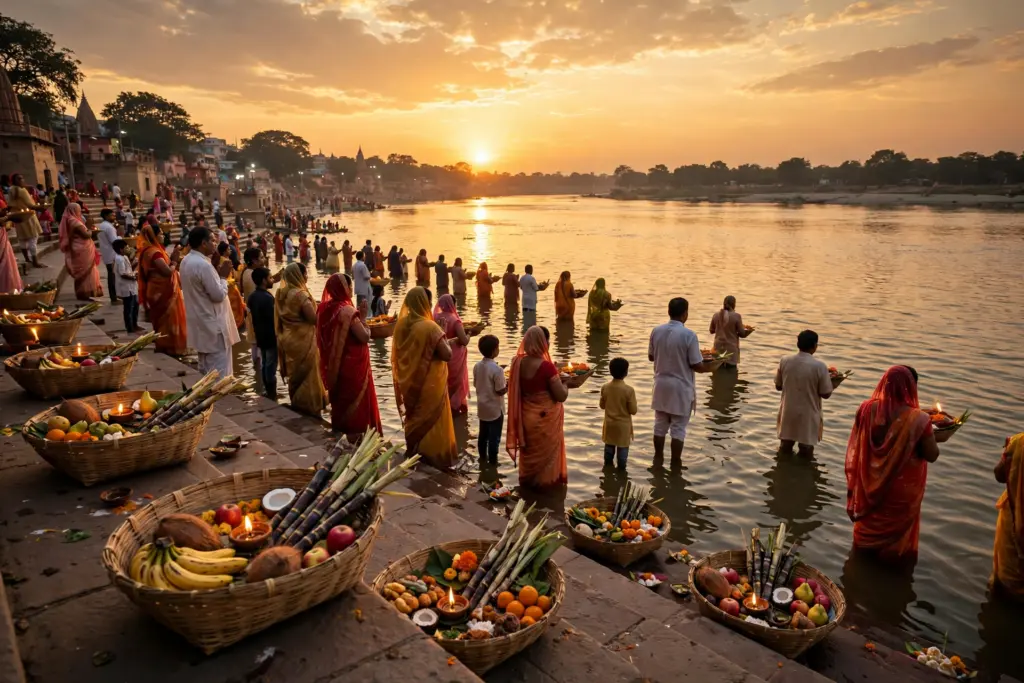
- Day 3 — Sandhya Arghya, Sunday, 15 November: the main day. Devotees stand in the water at the ghat and offer arghya to the setting sun.
- Day 4 — Usha Arghya and Parana, Monday, 16 November: arghya to the rising sun, after which the fast is broken (parana) and prasad is shared.
The festival falls on Kartik Shukla Shashthi, the sixth day of the bright fortnight. In 2026, the Shashthi Tithi runs from 11:24 PM on Saturday, 14 November to 2:01 AM on Monday, 16 November.
Arghya timings: sunset on 15 November, sunrise on 16 November
Arghya is offered at the moment of sunset and sunrise, so the time depends on your city:
- Patna: sunset on 15 November at about 5:01 PM; sunrise on 16 November at about 6:07 AM
- Delhi: sunset on 15 November at about 5:28 PM; sunrise on 16 November at about 6:44 AM
- Varanasi: sunset on 15 November at about 5:07 PM
- Ranchi: sunset on 15 November at about 4:57 PM
Reach the ghat 30 to 45 minutes before sunset on 15 November — devotees are usually in the water well before the sun touches the horizon. For the morning arghya on 16 November, devotees stand in the water in the dark from around 5 AM and offer the moment the sun appears.
What goes in the soop
The offerings are carried in a bamboo basket called a soop: seasonal fruits, thekua (a wheat and jaggery biscuit made specially for Chhath), sugarcane, coconut, bananas, and a diya. Unlike most Hindu festivals, Chhath has no idol and no priest — the devotee prays directly to the Sun, Surya, and to Chhathi Maiya, for the health and long life of the family, especially children.
Travel and bank holidays around Chhath
- Trains and buses: Bihar-bound trains and buses run full in the days before Chhath, as people travel home for the festival. Book early, and expect crowds at Patna, Gaya, Muzaffarpur, Darbhanga and Varanasi.
- Delhi ghats: the main Chhath ghats in Delhi are along the Yamuna — ITO, Sonia Vihar, Wazirabad and the Chhath Puja Park in Rohini, among others. Arrive early; the ghats fill up by mid-afternoon on 15 November.
- Bank holidays: 15 November is a Sunday, so banks are shut anyway. Monday, 16 November is a bank holiday in Bihar and Jharkhand for Chhath Puja.
- The 36-hour fast: the nirjala fast from after Kharna on 14 November until the morning arghya on 16 November is one of the longest ritual fasts in India. Elderly devotees and people with health conditions should take medical advice before observing it, and should stay hydrated before the fast begins.
Related articles on HimachalGovt
- Dhanteras 2026 Today: Puja Muhurat 6:02 PM to 7:57 PM, Gold Buying Timings and What to Buy — https://himachalgovt.com/stories/dhanteras-2026-date-puja-muhurat-gold-buying-guide
- Bank Holidays November 2026: Diwali Closures on 9, 10 and 11 November, Full List — https://himachalgovt.com/stories/bank-holidays-november-2026-diwali-full-list
- Muhurat Trading 2026: NSE and BSE Open on Sunday 8 November, 2:20 PM to 3:30 PM — https://himachalgovt.com/stories/muhurat-trading-2026-nse-bse-8-november-timings