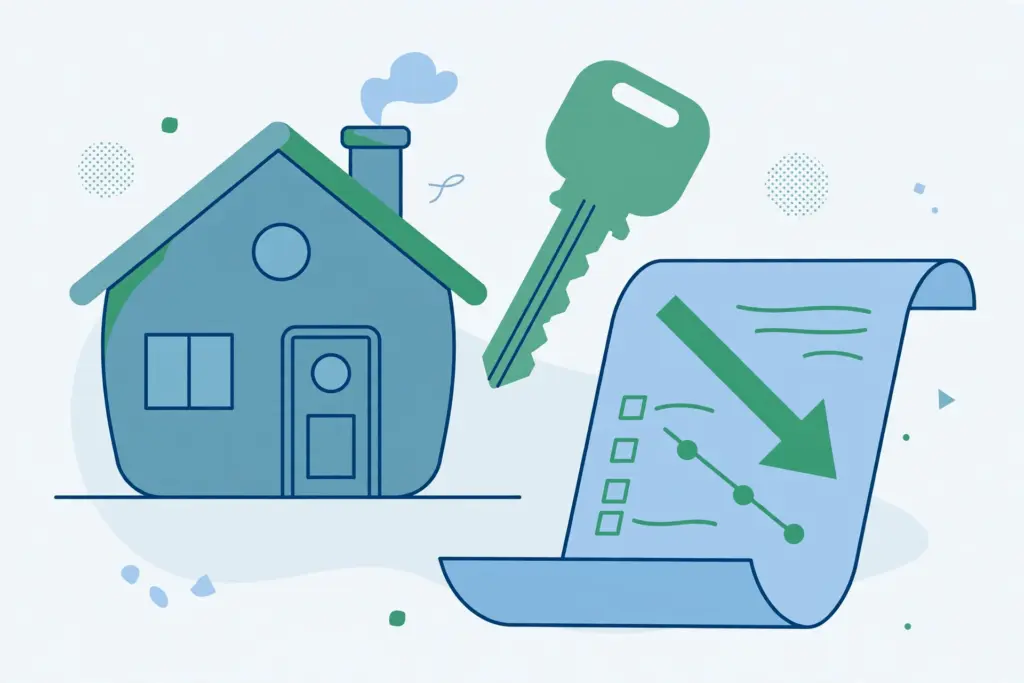
Mortgage refinance means replacing your current home loan with a new one, usually to get a lower interest rate, a lower monthly payment, or a different loan term. It can save money — but only if the numbers work after the costs.
When refinance can help
- Rates have fallen: If current rates are at least 0.75 to 1% lower than your rate, refinance may be worth checking.
- Your credit score improved: A better score can get you a better rate than when you first borrowed.
- You want a shorter term: Moving from a 30-year loan to a 15-year loan raises your monthly payment but can save a lot of interest over time.
- You want cash out: A cash-out refinance lets you borrow against your home’s equity, but it raises your loan balance and your risk.
The costs to check
Refinance is not free. Closing costs are usually 2 to 6% of the loan amount, and include lender fees, appraisal, and title costs. Work out the break-even point: divide the total closing costs by your monthly saving. If it takes 3 years to break even and you plan to move in 2 years, refinance does not pay.
When refinance does NOT make sense
- You plan to move soon
- Your credit score has fallen
- The closing costs are higher than the saving
- You would stretch a nearly-paid loan back to 30 years, paying far more interest overall
Before you decide
Compare at least three lenders, ask for the full closing costs in writing, and check whether the new loan has a prepayment penalty. A lower monthly payment is not a saving if the loan lasts many more years.
This is general education only, not financial advice. Mortgage rules and rates change, so check current rates and a licensed lender before deciding.
Related articles on HimachalGovt
- How to Read a Credit Card Statement in the USA: Balance, Minimum Due, and Interest — https://himachalgovt.com/stories/how-to-read-a-credit-card-statement-in-the-usa-balance-minimum-due-and-interest/
- Debt Payoff: Snowball vs Avalanche in the USA — Which Method Works Better? — https://himachalgovt.com/stories/debt-payoff-snowball-vs-avalanche-in-the-usa-which-method-works-better/
- Emergency Fund in the USA: How Much Do You Need and How to Build It — https://himachalgovt.com/stories/emergency-fund-in-the-usa-how-much-do-you-need-and-how-to-build-it