A cashback card pays you back a percentage of what you spend — 1% to 6% depending on the card and the category. Here is how they work and which type fits you. This is a general-education guide, not financial advice.
How cashback works
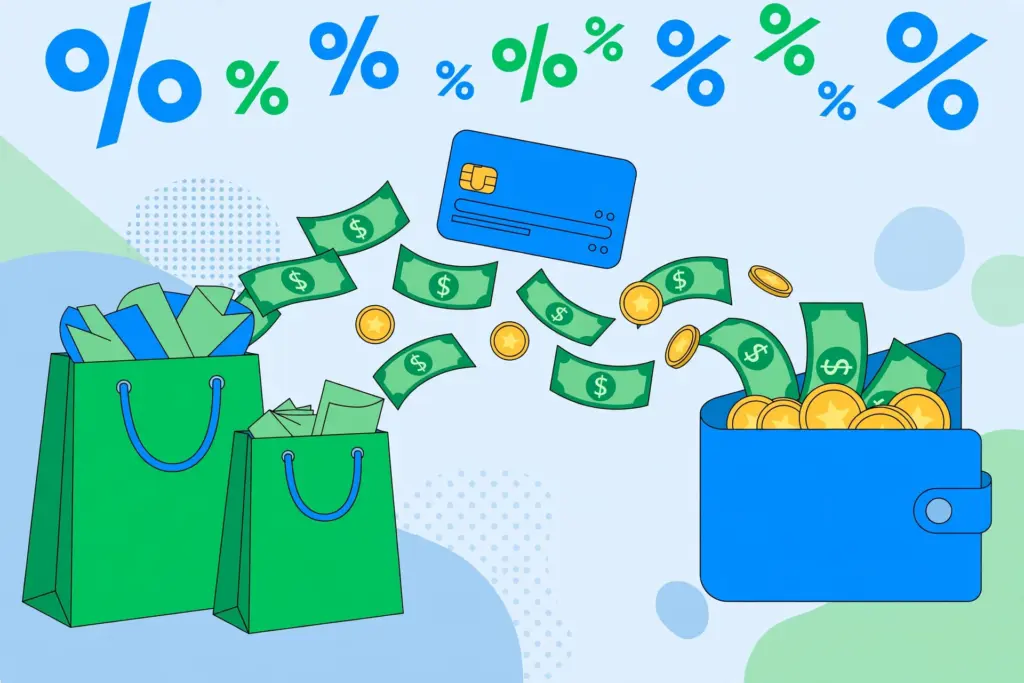
Cashback returns 1%–6% of your spending, redeemable as statement credit, a bank deposit, or a check. Card issuers fund the rewards mainly from merchant processing fees of about 1.5%–3.5% per transaction.
The three types
- Flat-rate: typically 1.5%–2% on everything. Leaders in 2026: Citi Double Cash — 2% (1% when you buy + 1% when you pay), $0 annual fee; Wells Fargo Active Cash — flat 2%, $0 annual fee.
- Fixed-category: higher rates on groceries, gas, or dining. Amex Blue Cash Preferred — 6% at US supermarkets (up to $6,000 a year), 3% on gas and transit, $95 annual fee.
- Rotating-category: 5% in quarterly categories, usually with activation required. Discover it Cash Back — 5% rotating (up to $1,500 a quarter), 1% elsewhere, and Cashback Match doubles your first-year earnings.
The hard rule
Cashback only wins if you pay the balance in full every month. Carrying a balance at 20%+ APR wipes out a 2% reward many times over — a card that pays you 2% back while charging 22% interest is a bad deal.
Related articles on HimachalGovt
- How to Read a Credit Card Statement in the USA: Balance, Minimum Due, and Interest — https://himachalgovt.com/stories/how-to-read-a-credit-card-statement-in-the-usa-balance-minimum-due-and-interest/
- How Credit Card Interest (APR) Actually Works in the USA — A Simple Guide — https://himachalgovt.com/stories/how-credit-card-interest-apr-actually-works-in-the-usa-a-simple-guide/
- Best High-Yield Savings Accounts in the USA: How to Earn 4% or More on Your Cash — https://himachalgovt.com/stories/best-high-yield-savings-accounts-in-the-usa-how-to-earn-4-or-more-on-your-cash/